Abstract
This article explores the evolution and significance of Scanner Animation, an experimental animation technique that directly transforms analogue spaces into digital pixels. It defines scanner animation as a frame-by-frame method and connects it to recent applications. This study also investigates the unique characteristics of scanner animation, distinguishing it from other animation forms by analysing its historical context and previous research.
Focusing on semiotic and aesthetic aspects, including hybridization and instant physical interaction with the medium, this study delves into the individuality, personal styles, and poetic expressions found in scanner animations. It also highlights the artistic value of errors, glitches, flickers, and other visual artifacts that emerge as essential elements of this medium, thereby reshaping its visual language. The article also showcases notable works in scanner animation, emphasizing the variety of approaches and conceptual explorations within the field.
As artists continue to experiment with this technique, scanner animation challenges traditional perceptions of cinematic language and broadens the understanding of digital arts. Therefore, a dedicated section of this article explores the new visual language this technique generates, offering insights into ways to improve and evolve it further.
All in all, this study aims to define scanner animation through a comprehensive overview of various approaches, spotlighting its unique position at the intersection of technology and artistic expression. It represents insights into the technological dimensions of cinema, contributing to a deeper understanding of its trajectory and future potential in the ever-expanding field of digital arts.
Keywords: Scanner Animation, Experimental Animation, Flatbed Scanner, Semiotics and Aesthetics, Digital Art.
Introduction
The meaning of experimental animation is well-established in numerous books and articles, including Experimental Animation: An Illustrated Anthology (1976), Experimental Animation from Analogue to Digital (2019), and multiple works by Paul Wells (1998), Paul Taberham (2019 and 2023) and Maureen Furniss (2009 and 2016). Russet and Starr examined different techniques and perspectives toward experimental animation through various approaches. Referring to this category as “non-cartoon animations” (Russett and Starr 1976, 7), they argued that experimental animation artists have evaluated the potential of technology by exploring new tools and techniques to create innovative forms of animation (Russett and Starr 1988).
On the other hand, Taberham described the process of making experimental animations as “medium expansion” (Taberham 2023, 220). He noted that experimental animators, such as John Whitney and Peter Foldes, were the first artists to explore the capabilities of early computers and digital technologies in making fluid visuals. Similarly, other authors have tried to develop a new language for understanding experimental animations. For example, Wells (1998) highlighted the crucial role of sound in such animations. He set silence, avant-garde music, and unconventional sounds against the dialogues, sound effects, and classical music in commercial animations and cartoons.
Additionally, this article discusses Gidal’s theories of structural film. In Theory and Definition of Structural/Materialist Film (1978), Gidal identified “technical innovation” as a crucial parameter. He argued that as technical practices develop, they are accompanied by the exploration of new aesthetics, whether or not such exploration is a primary goal (Gidal 1978, 11). The current article also focuses on studying innovative methods, alongside their newly created aesthetics. In this regard, the author of “A Kaleidoscopic View: Studying Diverse Aspects of Experimental Animation” (2024) describes experimental animation as a field for developing techniques that lack a clear identity and for “evaluating their potential in creating new aesthetics and movements, ultimately leading to the definition of their own unique identity” (Izadian 2024, 96). Building on this viewpoint, the present article aims to assess the transition of “scanner animation” from an unfamiliar experimental technique to a recognized artistic method. The hypothesis is that, after gathering and analysing the examples, the technique can be easily recognized by the audience while viewing one of the pieces.
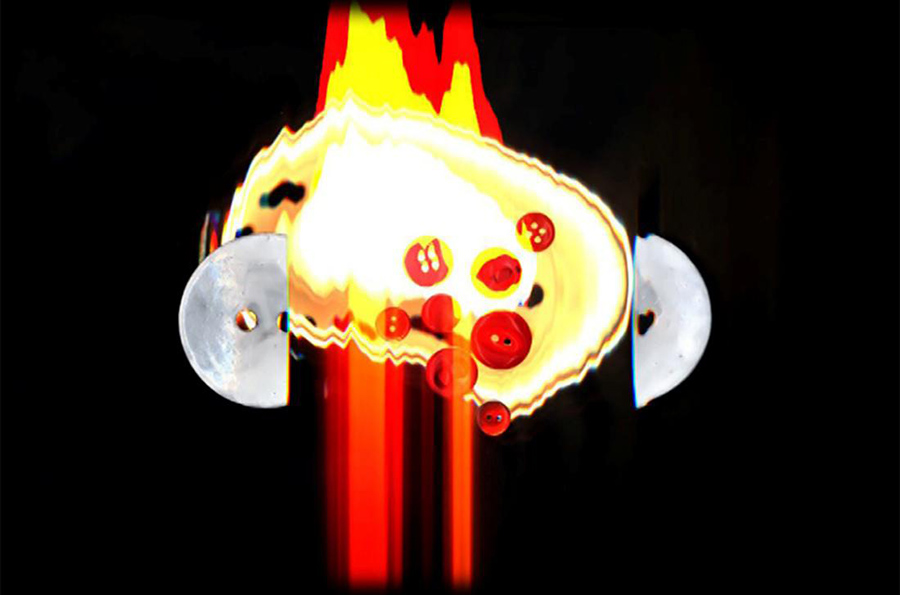
The idea of investigating the potential of Scanner Animation appeared after creating a short animation titled Spin in 2014 (Image 1). Since the scanned images were animated frame-by-frame using a flatbed scanner, the artist called the technique Scanner Animation. Although other examples with greater potential for technical development were found, a lack of scholarly research on this subject was noted.
Part of the approach to studying this technique is inspired by Fluid Frames: Experimental Animation with Sand, Clay, Paint, and Pixels (2016), which examined various under-the-camera animation methods that share similar characteristics, such as sand animation, oil paint on glass, and clay on glass. In a similar vein, while different types of scanners operate through different mechanisms and produce diverse visual results, scanner animation can be understood as a broad category that includes all types because they share certain fundamental characteristics and bridge analogue and digital art forms. Across these devices, both inanimate objects and the movements of living creatures can be animated or examined through scanning. However, the focus of this article is on flatbed scanners, since the vast majority of the examples discussed here were created using this type of device.
The following sections develop a framework for understanding the diverse methodologies employed in scanner animation. Based on an analysis of artistic contributions, the final framework distinguishes scanner animation from other forms and highlights its specific semiotic features and distinctive aesthetics.
Understanding Scanner Animation
The roots of scanner animation can be traced back to the 1990s, when artists began experimenting with digital media. The early pioneers of this form sought to disrupt conventional animations, often referencing the tactile nature of traditional art. This exploration was facilitated by the emergence of scanning technology, enabling artists to access tools previously used for scientific purposes. For example, in Choreography for Copy Machine (1991), Chel White examined a copy machine through a sequence of images of body parts and objects. Although the functionality of a copy machine was different from that of a scanner, the underlying process of making a stop-motion animation was similar.
In this technique, rather than the common usage of scanners, animated images are created in direct interaction with the digital device. For instance, the artist places three-dimensional objects or body parts on the flatbed scanner’s surface and moves them in synchronization with the scanner’s head instead of scanning flat documents or photos. In fact, scanner animation seems to be a transitional technique between analogue and digital spaces, making it comparable to the direct manipulations in the analogue method of scratch animation, which also involves manipulating the surface of film celluloids to add illustrations.
Manovich pointed out that the painted and scratched films, collaged images by avant-garde filmmakers, and the revolt against the indexical identity of cinema were signs of abnormal filmmaking. He regarded these new approaches in film technology as alternatives to commercial cinema, both aesthetically and technically (Manovich 1995). Gadassik also noted that making Fruit of All (2008) changed her understanding of “indexicality” 1, which had misleadingly separated photography from drawings and live-action from animated cinema throughout the 20th century. In this animation, through scanning and rendering the flesh of fruit, she explored a flatbed scanner as a digital “direct animation” device 2.
From this article’s point of view, pure scanner animations are those captured entirely with a scanner, requiring no post-production or complicated CG layering in software. Considering it a form of structural/materialist film, “each film is a record (not a representation, not a reproduction) of its own making” (Gidal 1978, 2). In this regard, the stress of scanner animation falls on the medium, or, as Gidal states, the “device” (Ibid., 1). Bertolini (2018) also explored the meaning and philosophy of device within the contributions of Deleuze, Foucault, and Agamben. According to this article, devices are “networks, skeins or machines that combine heterogeneous elements, structuring and organizing them within a common field” (Bertolini 2018, 1). In this context, a device can be equipment, materials, machines, gadgets, or even a place as a portal, to facilitate the transfer of subjects or objects through direct expressions of the artist or confrontations with “self” (Ibid., 3).
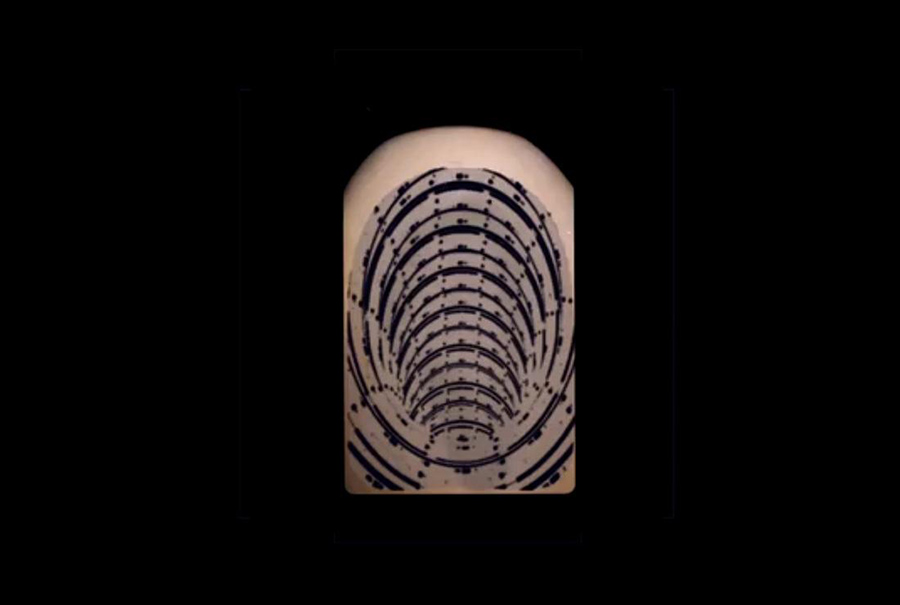
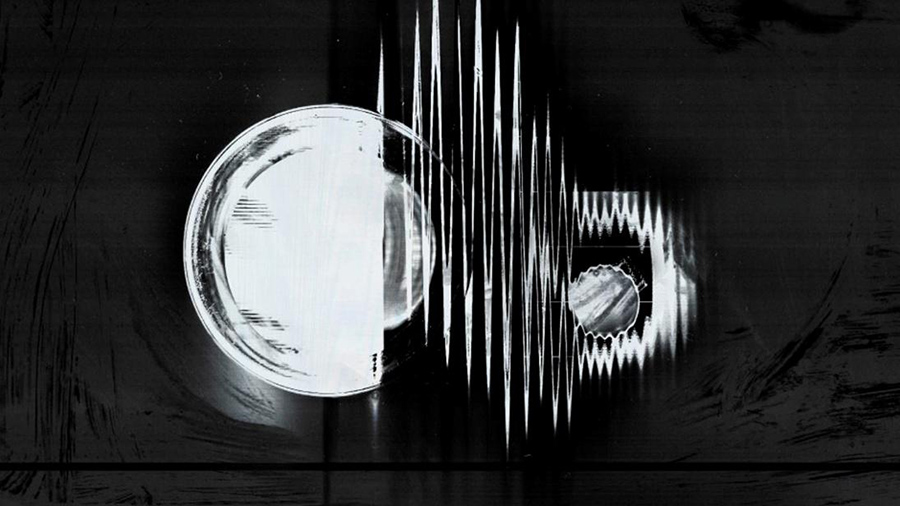
All types of scanning machines are classified as devices in this article. For instance, Anna Vasof employed a fingerprint scanner in one of her animation experiments, Escaping (2016), which is also the third part of Trilogy of Leaving (2016). In this stop-frame animation, she used scanned fingerprints to metaphorically convey the feeling of escaping through a portal from personal identity to deeper levels of our existence (Image 2). Utilizing her body as a medium, the fusion of performance/live art with visual art can be observed in this experiment.
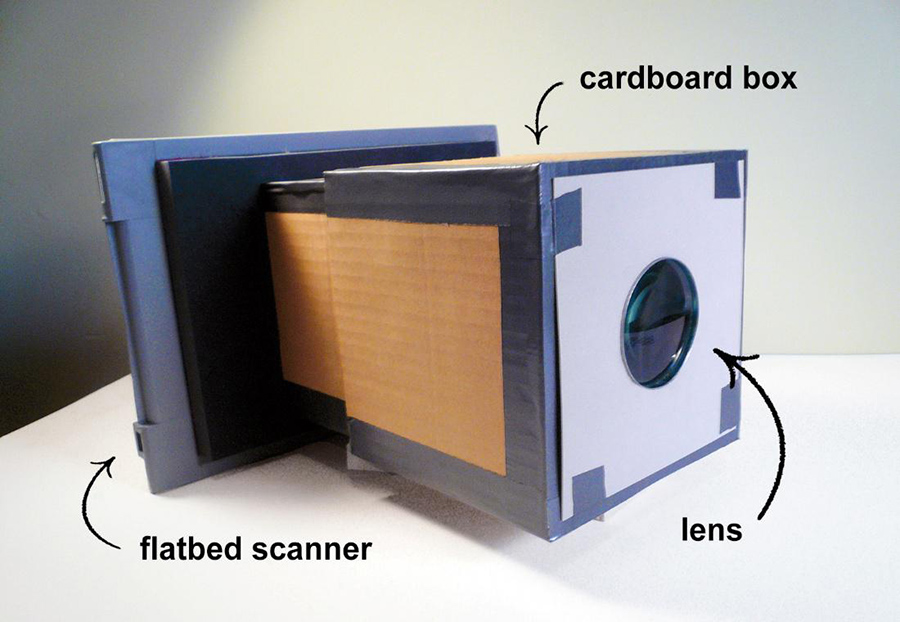
Another innovative approach involves the use of a scanner camera. Golembewski 3 investigated this technique in making multiple short films and photographs. For example, in Bus Ride (2008), he mounted this device on the roof of a double-decker bus in London to create a black-and-white stop-frame animation. Although visualizations made with a scanner camera represent a cinematic perspective, scanner animations often lack a linear perspective. Additionally, to implement the scanner camera technique and create stretches, a sliding box and a lens (serving as the focus mechanism) should be added to a flatbed scanner (Image 3). In this setup, the scanner switches to camera mode, merely to produce distorted cinematic visual effects rather than direct manipulations on the device.
On the other hand, Paul Sharits employed MRI brain scans to generate abstract representations of neurological activity during real-time perception. In “Performing the Margins of the New” (2018), Dirk de Bruyn referenced an interview 4 in which Sharits discussed the similarities between the patterning of one of his meticulous scores and “migraine fortification illusion patterns” (Bruyn 2018, 46). Sharits expressed his excitement when observing the projection of the nervous system, stating, “Like your brain is film or something” (Ibid.).
There are also experiments to create animations using 3D scanners and 3D laser scanners. While a specific experimental animation piece fitting this article has not been identified, the article emphasizes the approach to these experiences, which can foster a dialogue between art and technology resulting in technical adjustments. Moreover, a vast majority of examples found online are either short experiments with the device or student assignments, underscoring the significance of such techniques in the educational system and offering more opportunities for unconventional experiments.
Distinction From other Forms
The scanner animation technique can be categorized as a form of stop-motion animation, given its frame-by-frame capture system. Also, it seems that there are similarities between scanner animation and other techniques, such as John Whitney’s slit-scan photography technique. However, the technology behind each technique is entirely different. This section examines these differences to distinguish scanner animation from other similar forms.
As in the scanner animation technique, the slit-scan technique captures images frame-by-frame. This time-consuming technique involves masking the subject with one or two carved slits positioned in front of a moving camera toward the object along a ramp. One example is Catalog (1960) created by John Whitney, which showcases a colourful, hypnotic, and psychedelic effect. While being two different techniques, the slit-scan technique can be regarded as the historical origin of scanner animation. According to Remediation, Understanding New Media (2000), in the process of “remediation”, new visual media in the digital age gained cultural significance by paying tribute to, competing with, and reinventing earlier forms of media, such as paintings, photography, film, and television (Bolter and Grusin, 2000). For instance, Ada Lovelace’s programming for the Jacquard loom can be seen as an early precursor to the digital logic that later informed technologies such as 3D scanning 5.
Another source of confusion might be the term “Scanimate,” which is also known as a video synthesizer. The outputs of this analogue computer animation represent an electronic aesthetic with vibrant colours. In this real-time method, computer-generated images are recorded from a monitor using a camera. A notable example is Scape-mates (1972) created by Ed Emshwiller, one of the pioneers of this technique (Russett and Starr 1976, 206). While Scanimate is an analogue form of computer animation with no scanning, scanner animation is a digital technique that creates images without direct computer manipulation.
On the other hand, one might argue that there is no difference between an animation created with a digital camera and those made with a flatbed scanner, as a scanner also functions as a capture device. To address this perspective, we need to explore the differences between the mechanisms behind these two devices. In a flatbed scanner, a lamp (e.g., a xenon tube bulb) illuminates the scanning surface. A movable mirror reflects the details of the object to a fixed mirror, which directs them to the lens. The lens folds the light so that it can be concentrated onto the Charge-Coupled Device (CCD). The CCD cells then read the photons in greater detail and convert them into electronic signals. These signals pass through an Analog-to-Digital Converter (ADC), which transforms them into digital data and transfers them to the computer (Image 4).
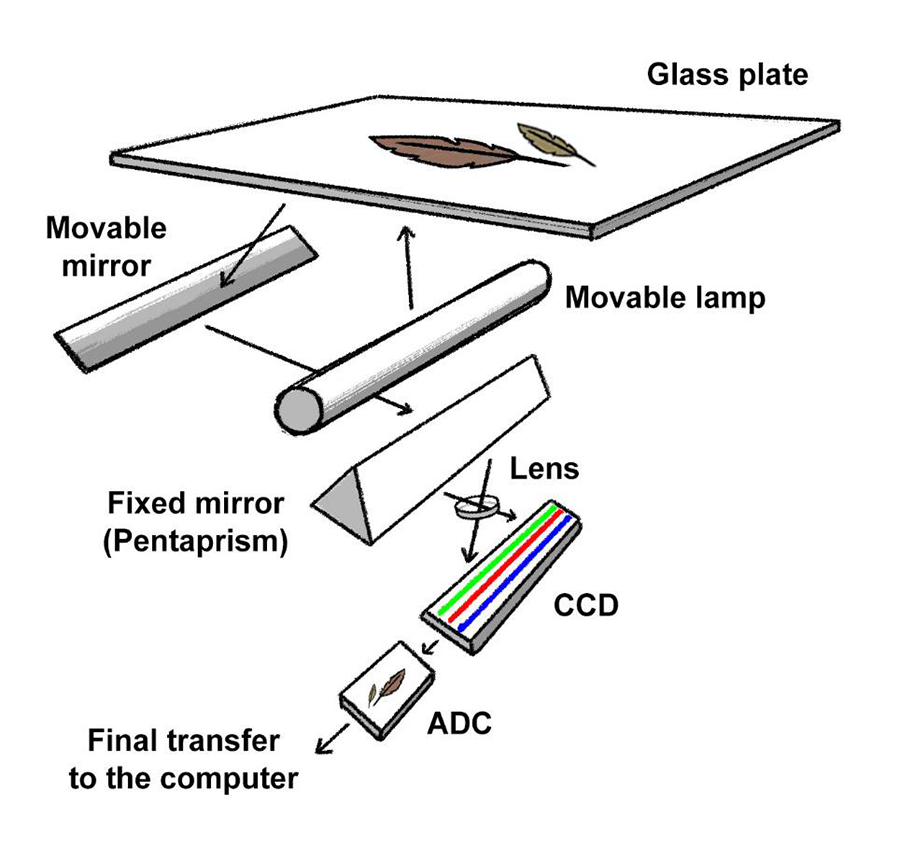
In this process, we achieve a higher resolution with more pixels than a digital camera. In other words, the fundamental operating mechanism of a flatbed scanner enables precise capture of textures, colours, and details, which can be compiled into a seamless animation. Unlike a camera, which capturing occurs all at once, a scanner operates gradually. Depending on the desired resolution, the speed of the scanner’s head and the duration of capturing each frame varies. During the process, the artist has a long stretch of time to adjust the object’s position and add/remove elements to/from the device. Consequently, the speed of capturing an image is crucial in scanner animation. While creating a stop-frame animation with a scanner seems time-consuming, the slow pace of processing gives enough time to craft the desired image and apply spontaneous inspiration.
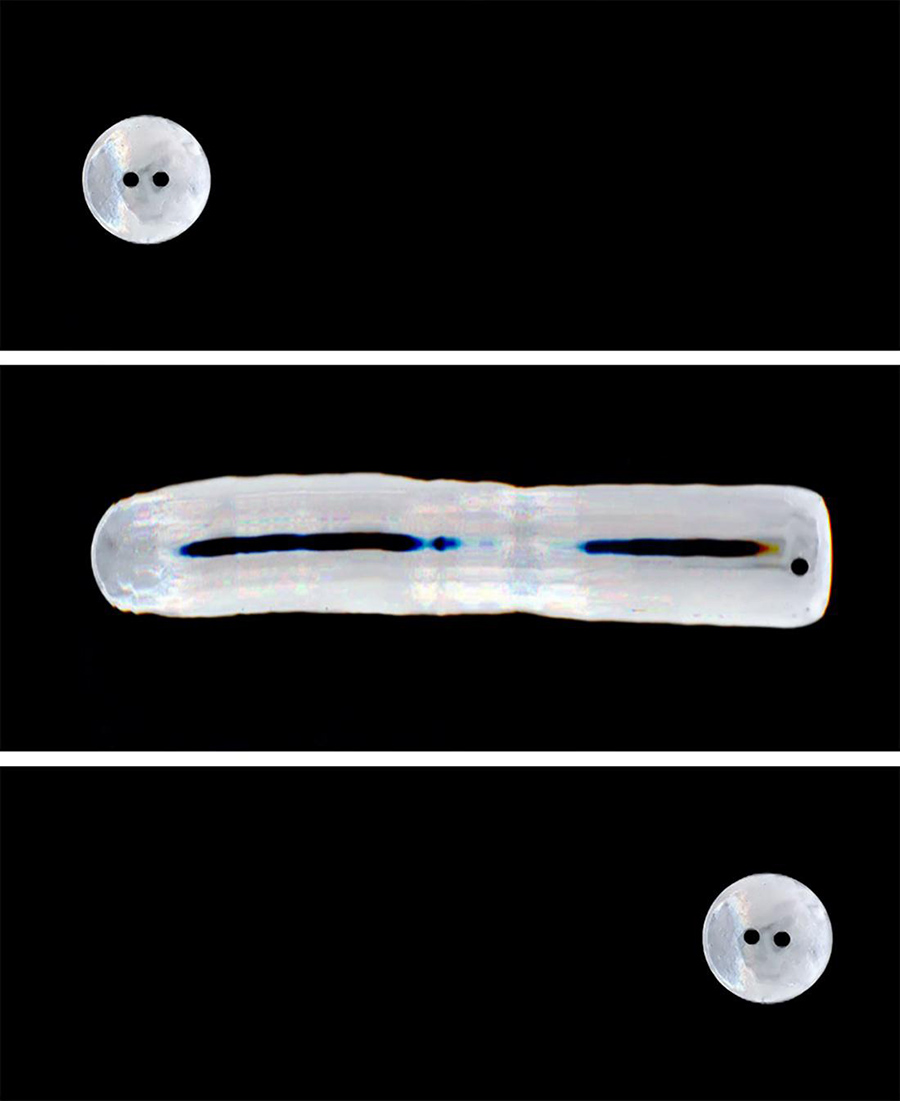
Another possible comparison here is with long-exposure or light-painting animation 6, where a similar effect may seem to occur. However, these techniques capture the entire scene at once with a camera. As a result, ghost-like traces may appear when a person enters the frame, manipulates an object, and then exits. In scanner animation, by contrast, a portion of the frame always remains unscanned until the very last moment of transporting the full image. This process enables the creation of an image without leaving a visible trace, while the scanner progressively records countless narrow slices of the frame (Image 5).
These interrupted shootings evoke the studies in chronophotography by Étienne-Jules Marey and Eadweard Muybridge, which visually analyse movement by breaking it down into multiple photographic shots. D’Armenio (2024) identifies two types of visualization in chronophotography: first, separate images are arranged adjacently from the same figure captured in a series of different moments to articulate the same thematic movement spatially and temporally; second, all the shots are merged into a single image, making the reduplicated and superimposed parts and bodies almost indistinguishable in a blur effect (D’Armenio 2024, 25-26). In this regard, the scanner animation technique aligns closely with the second approach, creating a single image from multiple movements.
On the other hand, compared to the photographic nature of cinema, in scanner animation, whether using a flatbed or 3D scanner, there is no Renaissance linear perspective. In fact, scanners capture material from an extremely close range. As a result, anything in the background tends to appear blurry. This also creates greater limitations for a scanned frame than for a photograph and leads to different approaches to composition and mise-en-scène. An exception can be found in laser scanner outputs, which produce a 3D image with a limited sense of perspective. In this case, the capture process depends on the range of the laser and the structure of its scanning field.
In this section, the distinctions between scanner animation and other visually or technically similar methods were examined. The discussion now continues with an exploration of aesthetics and semiotics through the specific characteristics of scanner animation, in order to provide a clearer understanding of this technique.
Aesthetics and Semiotics
The aesthetics of images and the conversion of analogue light to digital pixels are essential properties of scanner animation, leading us to the notions behind this technique. For instance, a dark, vague background combined with an overexposed foreground rich in textures can evoke a dramatic atmosphere or a mysterious alternate reality. In Spin (2014), the artist was inspired by the Big Bang theory, the creation of our universe, and metaphysics. The animator’s hand symbolizes the hand of a creator and the buttons represent the elements of the universe: the planets, stars, creatures, and people (see Image 1). A similar approach is evident in S.C.A.N. Searching Alternative Nature (2015), where the artist illustrates an alternative galaxy and its inhabitants (Image 6).
On the other hand, while some of the animations aim to convey a story or hidden meaning, others take an abstract approach. Additionally, some artists manipulate reality to create surreal content. For instance, in SCANNER (2008), the artist places his head at the most extreme close-up on the glass and rolls it in response to the scanner’s head. He shifts the dimensions of his face by changing his facial expressions, resulting in grotesque forms. Another example is Skin Cell (2017), in which the artist employs the stretch effect to distort his body and create surreal images (Image 7).
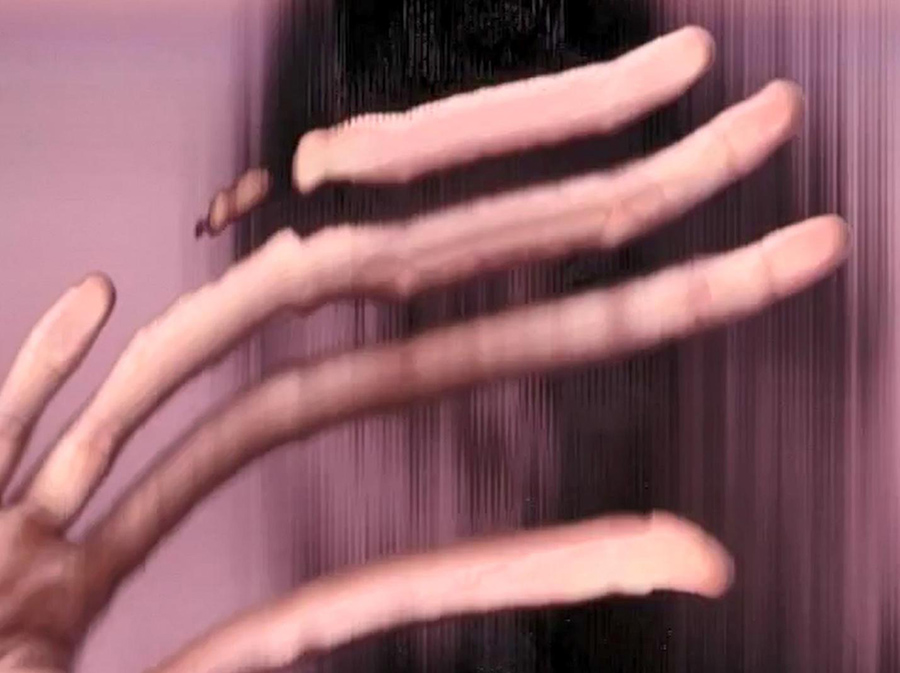
Although this may cause the audience to experience a sense of unfamiliarity, resembling horror cinema or Walter Benjamin’s “shock theory” 7, the presence of glass intervenes in the transmission of uncanny feelings.
As mentioned earlier, the primary function of a scanner is to capture a fixed subject, such as a document or a 3D object in the case of 3D scanners, with maximum accuracy and free from distortion, glitches, or errors. In scanner animation, however, these very errors become significant expressive properties. The aesthetic value of glitches and errors serves as a central component of scanner animation. Experimental artists actively integrate these mistakes into their work to reveal new meanings and deepen aesthetic experience. These (un)intended effects challenge traditional notions of artistic perfection and invite viewers to appreciate the beauty of imperfection.
Regarding the meaning of glitch in digital media, Moradi in Glitch Aesthetics (2004) and Menkman in The Glitch Moment(um) (2011) described it as a “technical failure.” However, when defining “glitch art,” two approaches emerge: “Pure Glitch” and “Glitch-alike” (Moradi 2004, 9-10). From this point of view, pure glitches are accidental and authentic while the glitch-alike images are deliberate and artificial. On the other hand, Menkman (2011) encompasses both accidental and artificial glitches, defining “glitch art” as a genre.
In the case of scanner animations, the artists acknowledge the accidental errors and deliberately control them to create new aesthetics or pure art pieces. However, the role of the device remains unclear, as it does not cause failures; rather, the artist manipulates the image in real-time during interactions with the device. In other words, the artist becomes part of the mechanism in the process rather than a passive user of the device. In a flatbed scanner, the glass is not just a surface to work on but a window to a physical world trapped in a limited cave 8. This is an explicit exemplar of “perceptual apparatus” or a “receptive surface,” as Freud describes (Freud, 1961, 228).
In this regard, in scanner animation the brain, hands, and device are linked to create a choreography between the artist and the scanner. For instance, in synchronization with the scanner’s head, artists intentionally design glitched effects to create smears, manipulate frames to make in-betweens or motion-blurs (Image 8), or simply create a stretched visual to make an eccentric image (see Image 7). Moreover, in some animations, the artists make rippled lights to achieve a creative digital visualization. For example, in Untitled (2018), the artist synchronized the ripples made by a flashlight with music.
The artistic approaches in this technique vary, as the artists utilize different materials and methods to showcase their individual styles. For instance, in Spin (2014), hundreds of buttons are used to represent colourful creatures, while Jodi Mack incorporates natural elements, such as leaves and flowers, using analogue visualizations and flicker effects. In S.C.A.N. Searching Alternative Nature (2015), the artist mixes materials like watercolours, string, and paper to create textures. Also, due to the device’s mechanism, using reflective materials can generate colourful diffraction patterns from light (Image 9), making it an ideal medium for creating psychedelic art.
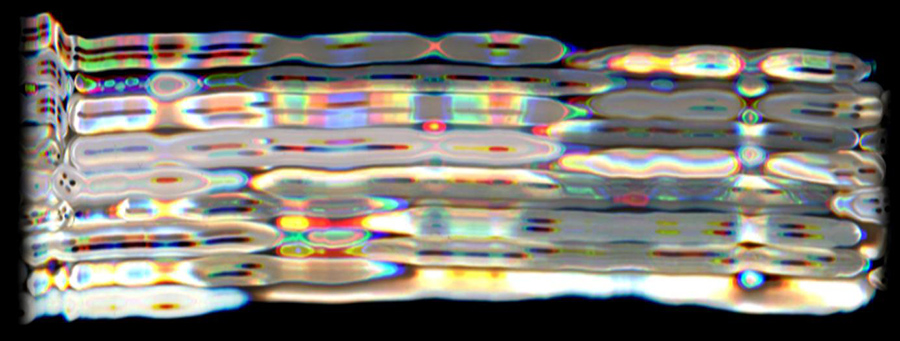
These effects may result from the transition of light within the flatbed scanner, particularly when it is refracted in a prism-like manner before being converted into digital pixels (see Image 4). As previously mentioned, scanner animation often lacks a linear perspective, complicating the cinematic layering process. Furthermore, the pure examples do not require post-production to create layered images. For example, in Flower (2008), the artist creates layers directly on a flatbed scanner by placing objects one behind the other. However, in some cases, such as Scanner Salsa (2008), the artist employs digital composition in a way that preserves the pure perception of the technique.
Examining significant works of scanner animation in the previous sections reveals how various artists have embraced artistic errors when capturing images. Notable pieces often demonstrate how imperfection can accentuate themes within the artwork, fostering discourse around the nature of authenticity in the digital arts. In the next section, we further discuss these characteristics to identify ways to improve this technique.
Improving the Technique
When improving the final image’s quality, there are two factors to consider. First, the image quality as a content, then the space around the device. There seem to be ways to improve the workspace around the device. For example, in a flatbed scanner animation technique, designing a small photography tent made from cardboard 9 helps improve the capture of physical objects in a dark space. Advancing the setup enables the artists to concentrate on the quality of their production and identify their individual style. For instance, considering the issues of making animated images with flatbed scanners, such as unwanted shadows, highlights, dust, and noise, leads to designing a more compatible scanning setup similar to a light box. The following image represents a pre-suggested design for a more advanced setup, including all essential parts (Image 10).
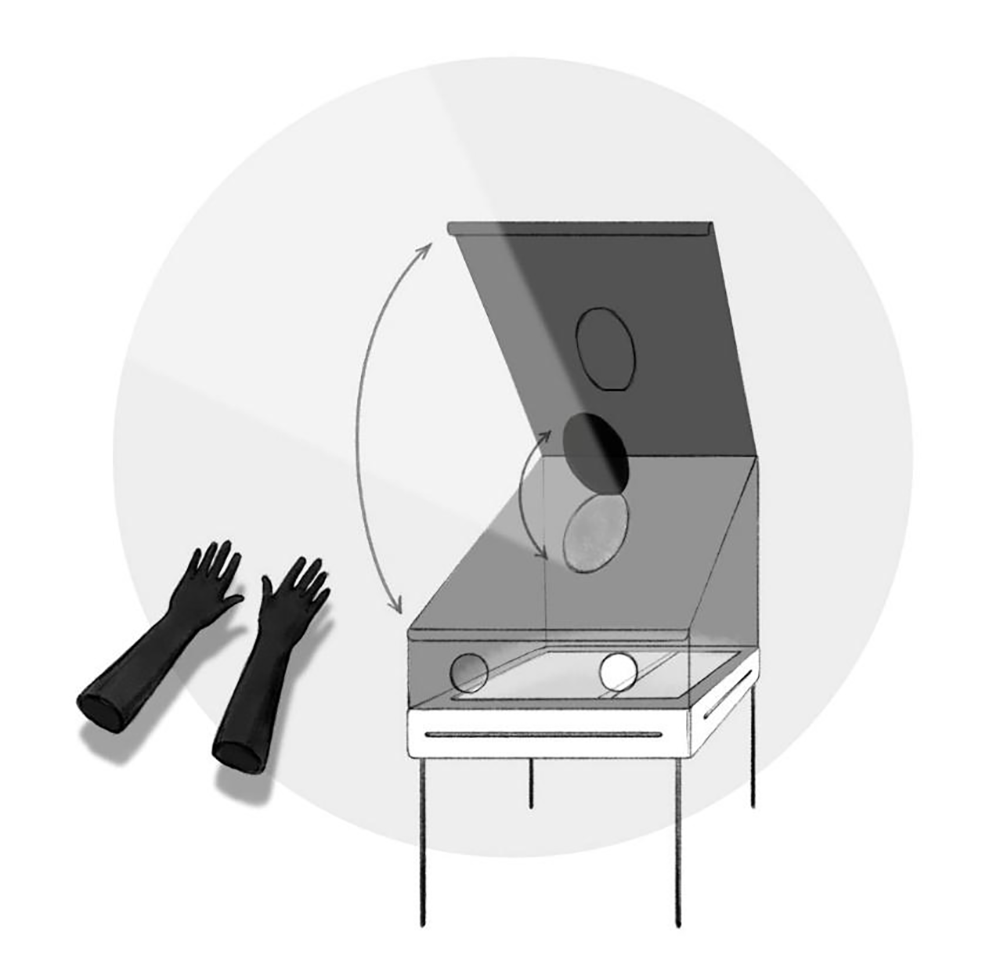
This table comes with a tent to hide the environment and make a dark room. The artist can observe the frame from the hole at the top of the tent. There are also two holes for the hands to move the objects. Wearing black gloves helps hide unwanted images of the hands. A personal experience is that a pair of sunglasses can protect the eyes from overexposed light during long intakes. To add more, through painting inside the tent, the artists gain more ability to create a variety of backgrounds. Adding papers to the background and shifting colours from black to white, or vice versa, can help create dissolving effects.
Since this technique does not constitute cinematic decoupage, artists can experiment with analogue visual effects that enhance transitions and rhythm. As previously mentioned, stretches can serve as a smart and effective way to create such frames. Artists can creatively apply Disney’s 12 principles of traditional 2D animation, such as squash and stretch, arcs, and exaggeration, to enrich the visual language of scanner animation. In other words, instead of relying on traditional frame-by-frame capture, scanner animation allows us to take a more creative approach by using these principles through distortions, which also helps reduce time-consuming tasks. For example, if stop-motion typically requires 8-12 frames per second, in scanner animation, we can achieve a similar or even more dynamic result with fewer than 8 frames by generating fluid effects.
In addition, due to the lack of perspective, we can create layered frames by placing glasses parallel to the scanner’s glass at a short distance. This allows us to move small objects, using sticks, similar to techniques used in cut-out animations. While more ideas remain to explore, we will conclude this study, encouraging further experimentations and creative practices.
Conclusion
In conclusion, scanner animation represents a hybrid form of visual art that merges the physicality of objects with the fluidity of digital movement. Artists often combine various media, such as analogue art, performance, drawing, and collage, to develop a particular visual language. This blending of forms enriches their artworks, making them multidimensional and inviting the audience to have diverse interpretations.
On the other hand, in a world obsessed with digital accuracy, scanner animation accepts flaws. The presence of errors and glitches in this technique serves as a reminder of the human touch involved in the creative process. This technique emerges as an intersection of technology and artistic expression, highlighting the transformative potential of physical materials within the digital realm.
Furthermore, this study has aimed to provide insights into the essence of scanner animation by exploring its operational mechanisms, aesthetic nuances, and the impact of technological innovations. As artists continue to delve deeper into this medium, scanner animation challenges traditional perceptions of cinematic language, broadens our understanding of digital devices, and inspires future innovations in artistic creations.
Ultimately, categorizing the characteristics of scanner animation can help us gain a more vivid understanding of this technique:
- Direct manipulations on the device
- Hybrid nature: combining analogue, digital, and performance art
- Deliberate use of errors and glitches
- High sensitivity to light: results in high-resolution textures, detailed captures, and diffraction effects
- Emphasis on time and speed
- Absence of linear perspective
- Frequent appearance of body parts
- Surreal aesthetics: potential to create grotesque, uncanny, and psychedelic visuals
As an experimental method, scanner animation focuses on creating animated videos rather than producing traditional animated films. Although it is a medium for making moving images, the conventional approach of straightforward animation might not be suitable here. This is because capturing each frame takes a considerable amount of time and can lead to user fatigue. Given the processing speed of scanner animation, it is more effective to actively engage with each frame in relation to the device, rather than passively waiting for the process to complete.
While this article primarily explored animations created using flatbed scanners, it suggests that the underlying method could apply to other scanning devices as well, leaving the door open for further research. Like all experimental techniques, scanner animation has the potential to evolve and open new pathways in educational and artistic practices. In this regard, this article aimed to serve as an introduction to the topic, offering insights for artists, students, educators, and practitioners who are interested in exploring this unique and evolving medium.
Final Notes
1 Charles Sanders Peirce defines “indexicality” as the connection between an entity and its trace or imprint. For example, a footprint indicates the presence of a body, and lightning serves as a sign of an approaching storm. Source: http://www.helsinki.fi/science/commens/terms/symbol.html
2 Source: https://gadassik.com/2020/07/25/fruit-of-all-2008-220min/
3 Michael Golembewski is a designer, experimental media artist, immersive media practitioner, and author. His first book, The Grammar of Attention (2025) is a collection of 25 essays on shaping immersive experiences.
4 Paul Sharits Interview by Steina Vasulka in 1977: https://vimeo.com/12607672
5 The Jacquard loom (invented in 1801) revolutionized the textile industry. Inspired by its mechanism for weaving flowers and leaves, Ada Lovelace along with Charles Babbage developed the Analytical Engine, a machine that could “weave” algebraic patterns. Source: https://www.adalovelaceintitute.org
6 Light painting is a photographic technique that uses long exposure photography to capture the movements of a light source, creating luminous and dynamic visual illustrations. (Author)
7 Shock Theory is a modernist aesthetic notion that addresses the human presence in an external environment without prior expectation or context. (Author)
8 This part refers to Plato’s Cave Allegory; a metaphor for humans trapped within the illusion of the physical world. (Author)
9 To watch one of the examples, please visit: https://vimeo.com/521056280
Acknowledgement
To further explore this technique, this study invites the submission of relevant data, such as films, academic papers, and online resources, via email to scanneranimation@gmail.com. At the end of this article, I thank all the professors and artists who shared their insights and contributed to this research. I would also like to express my gratitude for all the help I received in accessing online resources and submitting this article to the conference during a prolonged internet blackout in Iran.
Bibliography
Bertolini, Michele. 2018. Device. “International Lexicon of Aesthetics”, Vol. 1, Milano, Mimesis. (DOI: 10.7413/18258630032. URL: https://lexicon.mimesisjournals.com/archive/2018/autumn/Device.pdf).
Bolter, Jay David., and Richard Grusin. 2000. Remediation, Understanding New Media. London: MIT Press.
D’Armenio, Enzo. 2024. “Kinetic Images. A Genealogy of Visual Media Based on the Concept of Movement” in The Semiotics of Animation. From Traditional Forms to Contemporary Innovations, Punctum International Journal of Semiotics, 10(1):13-34. (DOI: 10.18680/hss.2024.0002).
De Bruyn, Dirk. 2018. “Performing the Margins of the New” in Experimental and Expanded Animation: New Perspectives and Practices, edited by Vicky Smith and Nicky Hamlyn. 2018. Basingstoke: Palgrave Macmillan Cham.
Freud, Sigmund. 1961. A note upon the “Mystic Writing- Pad” [1925]. In The standard edition of the complete psychological works of Sigmund Freud, edited by James Strachey, Vol. 19 (1923- 1925), the Ego and the Id and other works. The Hogarth Press.
Furniss, Maureen. 2016. A New History of Animation. London: Thames & Hudson.
Furniss, Maureen. 2009. Art in Motion: Animation Aesthetics. New Barnet Herts: John Libbey Cinema and Animation.
Gidal, Peter. 1978. “Theory and Definition of Structural/Materialist Film” in Structural Film Anthology, edited by Peter Gidal. 1-21. London: BFI Publishing.
Harris, Mirriam., and Lily Husbands, and Paul Taberham. 2019. Experimental Animation: From Analogue to Digital (1st ed.). London and New York: Routledge.
Izadian, Pegah. 2024. “A Kaleidoscopic View: Studying Diverse Aspects of Experimental Animation” in The Semiotics of Animation. From Traditional Forms to Contemporary Innovations, Punctum International Journal of Semiotics, 10(1):93-115. (DOI: 10.18680/hss.2024.0006).
Manovich, Lev. 1995. “What is Digital Cinema?”. Available at https://www.Manovich.net.
Menkman, Rosa. 2011. The glitch moment (um). Amsterdam: Institute of Network Cultures.
Moradi, Iman. 2004. Glitch Aesthetics. Thesis. Huddersfield, UK: University of Huddersfield.
Parks, Corrie Francis. 2016. Fluid Frames: Experimental Animation with Sand, Clay, Paint, and Pixels. CRC Press.
Russett, Robert., and Cecile Starr. 1976. Experimental Animation: An Illustrated Anthology. Van Nostrand Reinhold Company.
Russett, Robert., and Cecile Starr. 1988. Experimental animation: Origins of a new art. New York: Da Capo Press.
Taberham, Paul. 2023. “Music Visualization and Medium Expansion: Key Themes in Experimental Animation” in A Companion to Experimental Cinema, edited by Federico Windhausen, 210-229. Hoboken, NJ: Wiley-Blackwell
Wells, Paul. 1998. Understanding Animation. London and New York: Routledge.
Filmography
Bus Ride. (2008)., Directed by Michael Golembewski. Video. https://vimeo.com/1423488
Catalog. (1960)., Directed by John Whitney., https://www.youtube.com/watch?v=Nie3DAilv8Y
Choreography for Copy Machine (Photocopy Cha Cha). (1991)., Directed by Chel White. Video. https://www.youtube.com/watch?v=u4k0pD20n5E&themeRefresh=1
Escaping. (2016)., Directed by Anna Vasof. Video. https://youtu.be/aRRdwK9Xo-g?si=0lQp3GfgkZX_ZiD7
Flower. (2008)., Directed by Michael Golembewski. Video. https://vimeo.com/1424205
Fruit of All. (2008)., Directed by Alla Gadassik. Video. https://www.youtube.com/watch?v=X24y1V6BJBk
Scape-mates. (1972)., Directed by Ed Emshwiller. Video.
SCANNER. (2008)., Directed by Diego Cumplido. Video. https://www.youtube.com/watch?v=7YhNoi5tjYc
Scanner Salsa. (2008)., Directed by Jessica Barnett. Video. https://vimeo.com/6503628
S.C.A.N – Searching Alternative Nature. (2015)., Directed by Dénes Ruzsa. Video. https://vimeo.com/133644889?fl=pl&fe=vl
Skin Cell. (2017)., Directed by Mark Bell. (AKA El Bleak). Video. https://vimeo.com/1736477
Spin. (2014)., Directed by Pegah Izadian. Video. https://vimeo.com/pegahizadian/spin
Untitled. (2018)., Directed by John Morena. Video. https://vimeo.com/showcase/6288272?video=365788046