Abstract
The visual identity of Black Metal is deeply rooted in 19th-century Romanticism, particularly through themes of nature, solitude, and the “Sublime”. This paper explores the intersection between the iconography found in Black Metal album covers — the subject of the author’s doctoral research — and the directorial strategies in contemporary cinema. By drawing parallels with the works of filmmakers such as Werner Herzog, Wim Wenders, and Theo Angelopoulos, the study examines how the “Romantic gaze” dictates composition, lighting, and the representation of landscape in audiovisual narratives.
The research focuses on the concept of provenance, tracing how the pictorial heritage of artists like Caspar David Friedrich migrates from static design to cinematographic direction. Through a comparative visual analysis, this study identifies a shared grammar that prioritizes atmosphere, existential isolation, and the monumentalization of the landscape over traditional narrative structures. Ultimately, the paper argues that the prevalence of these romantic tropes in audiovisual media serves as a bridge between subcultural aesthetics and high-art cinema, offering a cohesive visual language for expressing the human condition through silence and the environment. By linking the production of audio-visual content with design provenance, this study contributes to a transdisciplinary understanding of modern image-making.
Keywords: Cinema, Black Metal, Sublime, Visual Communication, Romanticism.
Introduction: The Convergence of the Profane and the Sublime
In the contemporary cultural landscape, it is not uncommon to witness unexpected, and sometimes jarring, intersections between artistic domains that, at first glance, appear to belong to entirely different spheres of human expression, social consumption, and academic categorization. However, a deeper visual, theoretical, and philosophical analysis often reveals profound ontological continuities beneath their surface differences (Mitchell, 2002). One such profound, albeit highly unexpected, convergence exists between the visual identity of Black Metal—an extreme, transgressive, and fiercely underground musical subculture born in its modern iteration in the late 1980s and early 1990s—and the philosophical, narrative, and visual frameworks of contemporary auteur cinema.
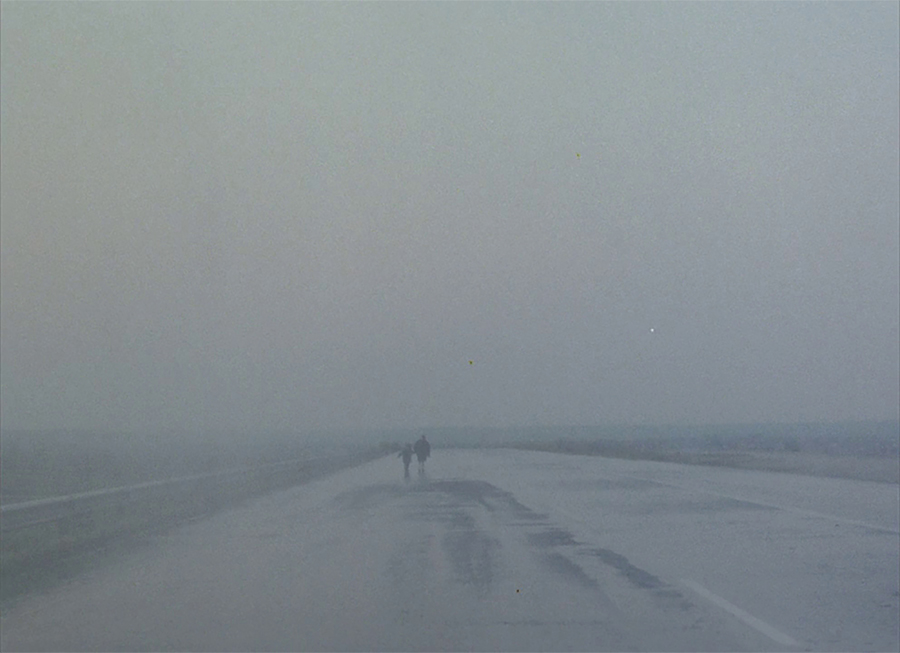
As observed in our contemporary analyses, the historical evolution of Black Metal reveals a continuous trajectory from its early Scandinavian roots, often documented through the limited lenses of criminality and juvenile iconoclasm, towards a highly intellectualized, avant-garde art form. The contemporary musicological and aesthetic paradigm shift identifies the adoption of “Auteur Cinema” (art-house/avant-garde) not merely as a source for audio samples, but as a structural, philosophical, and aesthetic blueprint for musical composition. We propose to investigate the hypothesis that contemporary Black Metal frequently operates as a form of “cinema for the ears,” absorbing the cinematographic techniques of directors from the New German Cinema—such as Werner Herzog and Wim Wenders—alongside the contemplative pacing of Theo Angelopoulos, to articulate profound concepts of nihilism and the Sublime. The slow, deliberate pacing of their films, their reliance on the long take (plan-séquence), and their refusal to provide easy answers or immediate gratification mirror the structural demands of atmospheric extreme metal. Both mediums require a surrender of the self to the overwhelming presence of the artwork. In films like Aguirre, the Wrath of God (1972) or Landscape in the Mist (1988), these directors utilize agonizingly slow, unbroken shots to force the viewer into a state of deep contemplation. The landscape is not merely a setting; it is an active, indifferent entity and a physical manifestation of an internal spiritual crisis. This exact methodology is employed by Black Metal artists. The repetitive, droning guitar riffs and the relentless, hypnotic blast beats are not designed to provide immediate melodic gratification; rather, they are sonic tools used to sculpt a devastating, overwhelming atmosphere that demands the listener’s complete submission.
Building upon our previous doctoral research (Pires, 2022), which meticulously detailed the provenance and prevalence of Romantic themes in Black Metal album covers, we noted how the subgenre systematically appropriated the works of nineteenth-century Neo-Romantic artists. Our previous findings demonstrated that the visceral and intentionally lo-fi soundscapes of bands like Burzum, Darkthrone, and Bathory found their precise visual equivalent in the gloomy, majestic, and often terrifying depictions of nature by artists such as Theodor Kittelsen, Gustave Doré, and Caspar David Friedrich (Pires, 2021). The album cover was never merely a packaging necessity; it was a profound ideological statement. In this present paper, we propose to expand the scope of our inquiry beyond the static format of the 12-inch vinyl gatefold and the CD booklet, moving towards the temporal, spatial, and dynamic dimensions of the cinematic medium.
By examining the works of visionary directors such as Werner Herzog, Wim Wenders, and Theo Angelopoulos, and placing them alongside the visual aesthetics and sonic philosophy of Black Metal, we aim to uncover a shared conceptual lexicon deeply rooted in the Romantic tradition (Karalis, 2021). In the same way that we felt relevant to make a very detailed introduction to the origins of extreme metal in our previous works, the same methodological rigor will be applied here to understand how cinematography appropriates the exact same aesthetics of the Sublime. We propose to explore how the pursuit of the Sublime, the critique of capitalist modernity, the fascination with decay, and the reverence for an indifferent, omnipotent Nature transition from the static reproducibility of the album sleeve to the moving image. Ultimately, we argue that both underground extreme subcultures and high-art auteur cinema utilise the exact same Romantic heritage to provide audiences with a contemplative haven in which to navigate the inescapable void of human existence.
Establishing the Parameters: The Persistent Romantic Worldview
Before we delve into the specificities of cinematic representation and its unexpected bridges to extreme music, it is absolutely crucial to establish the foundational parameters of what we consider “Romanticism” within the scope of this research. The traditional art historical view often restricts Romanticism to a closed chronological epoch, typically spanning the late eighteenth to the mid-nineteenth century, characterized by the works of Goya, Turner, Delacroix, and Caspar David Friedrich. However, as William Vaughan (2004) points out in his comprehensive study of Friedrich, the Romantic movement was fundamentally a reaction against an over-materialistic society, encouraging the view of nature as a paradigm of divine creation set against the artifice of human civilization. For the purposes of understanding its transmedial survival across centuries, we must understand it as a persistent worldview, a Weltanschauung that continuously resurfaces in times of profound cultural crisis.
As Löwy and Sayre (2001) eloquently postulate in their seminal work Romanticism Against the Tide of Modernity, the Romantic spirit is not a mere aesthetic preference; it is fundamentally a cultural protest against the modern capitalist world, the Industrial Revolution, and the alienating effects of the extreme rationalism birthed by the Enlightenment. They define it as “a cultural movement whose core is a rebellion against modernity in the name of past values” (Löwy & Sayre, 2001, p. 17). Taking this quote, we can convey a fundamental difference between mere historical pastiche and a genuine philosophical stance. When a Black Metal musician retreats to an isolated cabin to record an album on a 4-track cassette recorder, actively rejecting digital perfection, or when an auteur filmmaker refuses digital effects in favor of enduring the physical punishment of a remote location, they are both enacting this exact rebellion against modernity. They share a deep-seated melancholia for a lost connection with the primal, the mythic, and the irrational.
Furthermore, to understand this visual lineage, we must address the concept of the Sublime, particularly as it was theorized by Edmund Burke (1757) and later expanded by Immanuel Kant. For Burke, the Sublime is an artistic and natural effect productive of the strongest emotion the mind is capable of feeling. It is inextricably linked to concepts of terror, vastness, obscurity, power, and the overwhelming, life-threatening majesty of Nature. Burke distinguishes the Sublime from the Beautiful—where the Beautiful is harmonious and soothing, the Sublime is awe-inspiring and terrifying. When a Black Metal band utilizes a high-contrast, black-and-white, highly granulated photograph of a snow-covered Norwegian forest at midnight for its album cover, it is not merely a decorative choice. It is a visual communication of the Burkean Sublime. It subjectively speaks to the listener, preparing them for a musical experience that is raw, repetitive, and overwhelmingly atmospheric.
This connection is further illuminated by Friedrich’s own artistic philosophy. As Vaughan (2004) documents, Friedrich famously instructed artists to “Close your bodily eye so that you see your picture first with your spiritual eye. Then bring what you saw in the dark into the light, so that it may have an effect on others, shining inwards from outside” (p. 137). This reliance on the “inner eye” and the projection of internal states onto the external landscape is the very essence of the Romantic vision. Friedrich’s instruction was not merely a technical directive; it was a metaphysical manifesto. The “invention” that Friedrich demanded of the artist was not the product of academic training or external observation, but of an inner being, usually by means of a dream or vision (Vaughan, 2004, p. 138). Therefore, our challenge in this paper is to identify how this exact feeling of the Sublime—this mingling of terror and awe, this projection of the spiritual eye—is translated into the language of the camera lens, the framing of the landscape, the mise-en-scène, and the structural rhythm of the cinematic long take.
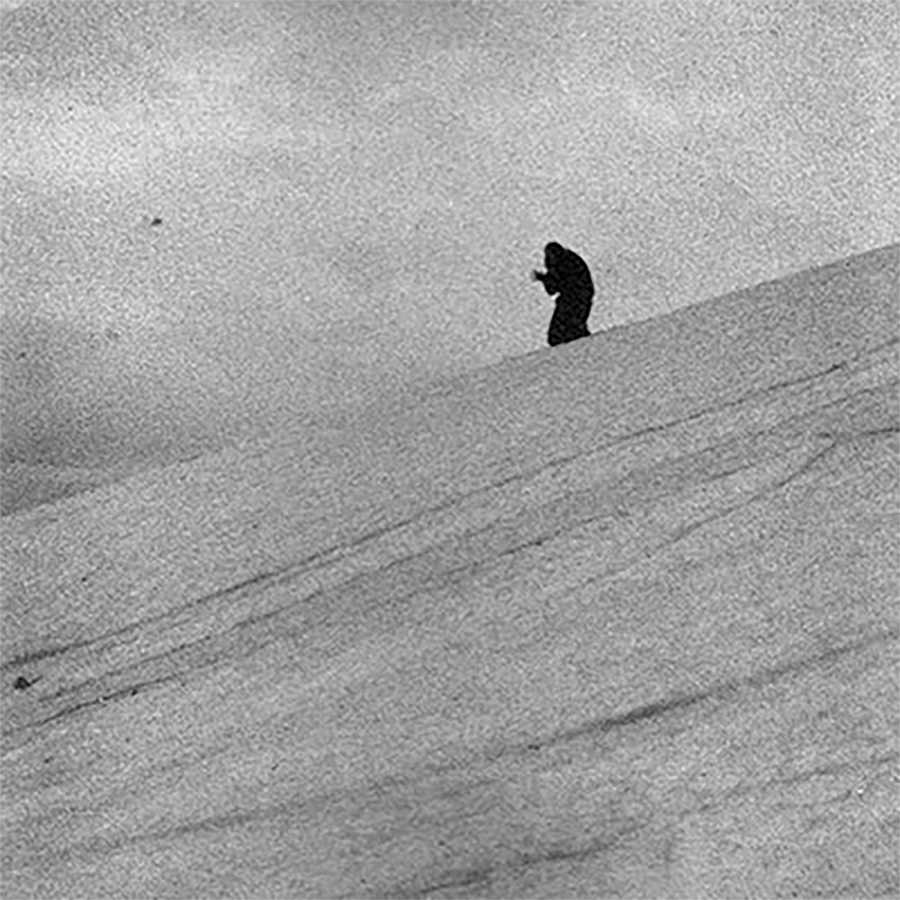
Equally significant to Friedrich’s philosophy is his development of the Rückenfigur—the figure seen from behind, standing at the threshold between the human and the natural world. As Vaughan (2004) observes, Friedrich’s back-turned figures are “undemonstrative, contemplative figures; they disrupt the view, often standing right in the way of our line of sight” (p. 106). These figures introduce a new concept of spectatorship: they indicate an individualized and personal response to the landscape, but it remains unclear whether they are surrogates for our response, or whether the real subject of the picture is us looking at them looking at the landscape. This radical ambiguity—this invitation to project oneself into the figure and, through it, into the sublime landscape—is precisely the mechanism that both auteur cinema and Black Metal visual culture have inherited and perpetuated. The solitary figure at the edge of the abyss, whether painted in oil on canvas in 1818 or photographed for an album cover in 1994, performs the same ideological and psychological function: it mediates the viewer’s encounter with the overwhelming, terrifying beauty of the natural world.
Furthermore, as Mitchell (2002) argues in Landscape and Power, the aim of any serious study of landscape must be to change it “from a noun to a verb.” Landscape, in Mitchell’s framework, is not an object to be seen or a text to be read, but a process by which social and subjective identities are formed. It is “an instrument of cultural power, perhaps even an agent of power” that “naturalizes a cultural and social construction, representing an artificial world as if it were simply given and inevitable” (Mitchell, 2002, p. 2). When we apply this framework to the visual culture of extreme metal and auteur cinema simultaneously, we begin to understand that the adoption of specific landscapes—the fog-drenched Norwegian forest, the desolate Amazonian river, the fog-shrouded Greek border—is never a neutral aesthetic choice, but a deliberate ideological positioning. The landscape becomes a verb, an active process of meaning-making that challenges the dominant narratives of contemporary society.
The Visual Baseline: Pagan Revivals, Ecology, and Black Metal’s Romantic Heritage
To fully grasp the bridge we are building towards the moving image, we must first consolidate our findings regarding visual provenance in extreme music, thereby establishing our comparative baseline. In the early 1990s, the Second Wave of Black Metal in Scandinavia emerged as a violent, ideological reaction against the commercialization of mainstream heavy metal. To match their ideological stance, these musicians crafted a “filthy,” treble-heavy sound, characterized by continuous, hypnotic tremolo picking, blast beats, and shrieked vocals. This sonic desolation required a specific visual aesthetic to communicate its underlying message.
As explored extensively in our previous research regarding the appropriation of nineteenth-century artists, the aesthetic choices made by these musicians were deliberate acts of cultural reclamation. A quintessential example is the use of Theodor Kittelsen’s works for albums like Burzum’s Hvis Lyset Tar Oss (1994) or Filosofem (1996) (Pires, 2021). Varg Vikernes deliberately chose illustrations from Kittelsen’s book Svartedauen (The Black Death). The use of The Pauper—an illustration depicting a grim, ominous figure wandering through decaying, plague-ridden landscapes—perfectly mirrored the sonic desolation and the misanthropic themes of the music. The atmosphere of isolation and the inevitability of death became a visual anchor for the audio experience.
We must also consider the ecological and pagan dimensions of this subculture. The shift towards Romantic aesthetics was heavily catalyzed by bands like Bathory. As noted by Manea (2020), Quorthon, the mastermind behind Bathory, steered the band away from its early Satanic imagery towards a celebration of Norse mythology and ancestral heritage, particularly with the seminal 1988 album Blood Fire Death. This established the foundation for “Pagan Metal,” where pre-Christian heritage was reconstructed to form an anti-modern, conservative discourse against mainstream culture. Furthermore, the appropriation of national romanticism extended to bands like Taake, who utilized Kittelsen’s imagery for their 1995 demo Manndaudsvinter and the Bjoergvin album, and Windir, who consistently employed romantic landscapes, such as Hans Gude’s Likferd på Sognefjorden, to visually represent their connection to specific Norwegian regions.
This fascination with the natural world operates within what has been termed “dark ecology” in extreme metal discourse. As Lopes (2021) suggests, the Norwegian Black Metal scene functions as a space for the resignification of the natural world. The music presents a deeply unresolved tension between the enchantment of ancient nature and the disenchantment of modern urban society. The distorted guitars and raw production attempt to match the wild dissonance and absurd violence of the contemporary disjuncture between idealized utopian visions of nature and dystopian environmental desecration.
In addition to the physical landscape, we must also acknowledge the psychological landscapes constructed by these artists. Drawing upon Carl Jung’s psychoanalytical theories, Silva (2016) argues that the anti-Christian, aggressive stance of Black Metal, often symbolized by the archetype of the “Horrible Father” or the shadow of God, serves as a mechanism to channel the primal, darker instincts of human nature. This aligns perfectly with the Romantic fascination with the irrational and the transgressive, as seen in the genre’s intertextual references to poets like Charles Baudelaire and William Blake, whose works are frequently appropriated by bands such as Alcest and Peste Noire (Barski, 2021).
Having defined our visual baseline in the static reproducibility of the album cover—encompassing romantic landscapes, ecological estrangement, and pagan nostalgia—another significant challenge arises: how do filmmakers, dealing with the temporal flow of moving images and narrative structures, utilize this exact same Neo-Romantic heritage?
The Medium and the Message: Transmedial Appropriations and the Aura
Before delving into the cinematographic analysis, we feel it is imperative to establish the theoretical mechanics of how images transition between mediums. As Marshall McLuhan famously stated, “the medium is the message.” When Black Metal bands appropriate a nineteenth-century painting by Doré or Kittelsen, the artwork loses its original historical context and becomes a signifier for extreme sonic violence and anti-modernity. We must look at this process through the lens of Walter Benjamin’s essay The Work of Art in the Age of Mechanical Reproduction (1935).
Benjamin argues that mechanical reproduction strips an artwork of its “aura”—its unique existence in time and space. When Friedrich’s Wanderer above the Sea of Fog is reproduced on thousands of CD covers, its original aura withers. However, in the context of Black Metal, we argue that the image is infused with a new aura, one of underground elitism, sonic terror, and ideological defiance. This is a crucial distinction: the appropriation is not an act of passive consumption, but of active ideological re-inscription. The same painting that once hung in a bourgeois Romantic salon, evoking a refined aesthetic contemplation, is violently re-contextualized to become the visual emblem of a subculture that explicitly rejects bourgeois comfort and safety. The aura is not destroyed; it is transmuted.
When contemporary cinema appropriates these same Romantic aesthetics, it does so through the mechanics of time, light, and movement. The provenance of graphic design in music and the mechanics of audiovisual production do not exist in isolated artistic vacuums. They belong to a circulating visual patrimony that continually recontextualises historical anxieties for contemporary audiences. A static album cover captures a singular moment of the Sublime—a frozen, eternal scream of terror before the abyss. Cinema, on the other hand, forces the viewer to endure the abyss in real-time. The visual tropes remain identical: the silhouetted trees, the impenetrable fog, the ruined abbeys, and the solitary wanderer. Yet, the cinematic medium allows for the process of alienation to be witnessed as it unfolds chronologically. The viewer cannot simply look away from the album cover in their hands; they are trapped in the duration of the film, forced to inhabit the landscape alongside the protagonist. Acknowledging the materiality and historical lineage of these images prevents their reduction to mere postmodern pastiche. The appropriation is not a sign of creative bankruptcy, but rather a testament to the enduring psychological power of the Romantic archetype across different media. As Mitchell (2002) reminds us, landscape is a dynamic medium that “circulates as a medium of exchange, a site of visual appropriation, a focus for the formation of identity” (p. 2). It is precisely this circulatory, transmedial quality of the Romantic landscape that allows it to migrate from Friedrich’s canvas to a Black Metal album cover to the celluloid frames of a Herzog or Angelopoulos film, retaining its essential ideological charge at every step of its journey.
Werner Herzog: The Ecstatic Truth and the Terrifying Indifference of Nature
When analyzing the intersection of the Sublime and cinematography, we must inevitably turn to the New German Cinema, and specifically to Werner Herzog. Herzog’s entire filmography can be read as a desperate, often maddening quest for what he terms “ecstatic truth.” This philosophy is famously codified in his “Minnesota Declaration” (Cronin, 2003). Herzog violently rejects the premises of Cinéma Vérité, declaring that “Fact creates norms, and truth illumination,” and that poetic, ecstatic truth “is mysterious and elusive, and can be reached only through fabrication and imagination and stylization” (Cronin, 2003, p. 301). This declaration aligns perfectly with the Black Metal ethos, which rejects the “facts” of modern, civilized society in favor of the “illuminating truth” of myth, darkness, and extreme emotion. As Herzog himself elaborated in conversation with Paul Cronin, “Cinema verite is the accountant’s truth; it merely skirts the surface of what constitutes a deeper form of truth in cinema” (Cronin, 2003, p. 239). For Herzog, mere facts are the domain of accountants; the ecstatic truth is a poetic, almost spiritual reality that transcends mere factual documentation, reached only through extreme conditions, physical endurance, and aesthetic fabrication.
Herzog’s landscapes are never mere passive backdrops against which a narrative plays out; they are active, ominous, and profoundly indifferent entities. As Herzog himself states in his conversations with Paul Cronin, “For me a true landscape is not just a representation of a desert or a forest. It shows an inner state of mind, literally inner landscapes, and it is the human soul that is visible through the landscapes presented in my films... This is my real connection to Caspar David Friedrich, a man who never wanted to paint landscapes per se, but wanted to explore and show inner landscapes” (Cronin, 2003, p. 136). This explicit invocation of Friedrich is not incidental; it is the key that unlocks the entire philosophical architecture of Herzog’s visual universe. Just as Friedrich instructed artists to close their bodily eye and see first with the spiritual eye, Herzog constructs his landscapes not as geographical documents but as projections of an inner, often tormented, spiritual condition. In films such as Aguirre, the Wrath of God (1972) or Fitzcarraldo (1982), the Amazonian jungle and the churning river are depicted with a terrifying grandeur that directly evokes the Burkean Sublime.
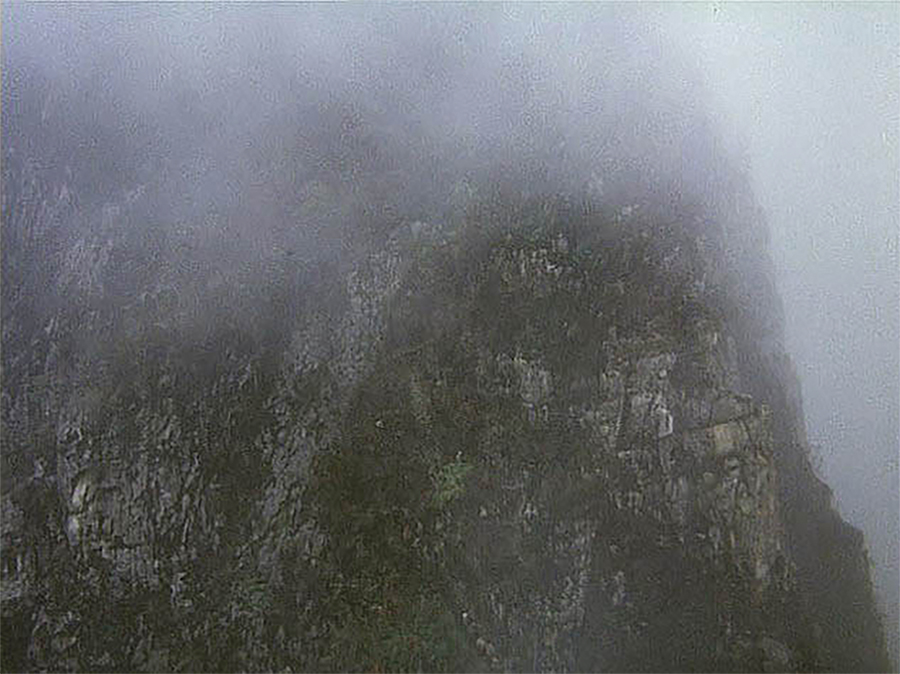
We propose a close reading of the iconic opening sequence of Aguirre. The film begins with an extreme wide shot of tiny human figures—Spanish conquistadors clad in rusting armor—descending a massive, perilous, mist-shrouded Andean mountain path. Accompanying this visual is the haunting, choral synthesizer music of the progressive krautrock band Popol Vuh. This specific audiovisual combination operates on the exact same frequencies as an album cover by Emperor or Wolves in the Throne Room. The human element is rendered entirely insignificant, fragile, and ultimately swallowed by the vastness of an uncaring, omnipotent natural world. As Roger Ebert (2017) observed, Aguirre belongs to “the great tradition of grandiose cinematic visions,” films that “exist on a plane apart from ordinary films.” The madness of Aguirre himself—his delusion of conquest, his absolute refusal to acknowledge the indifference of the jungle—mirrors precisely the hubris of the Romantic hero who seeks to impose his will upon a Nature that is utterly beyond his comprehension or control.
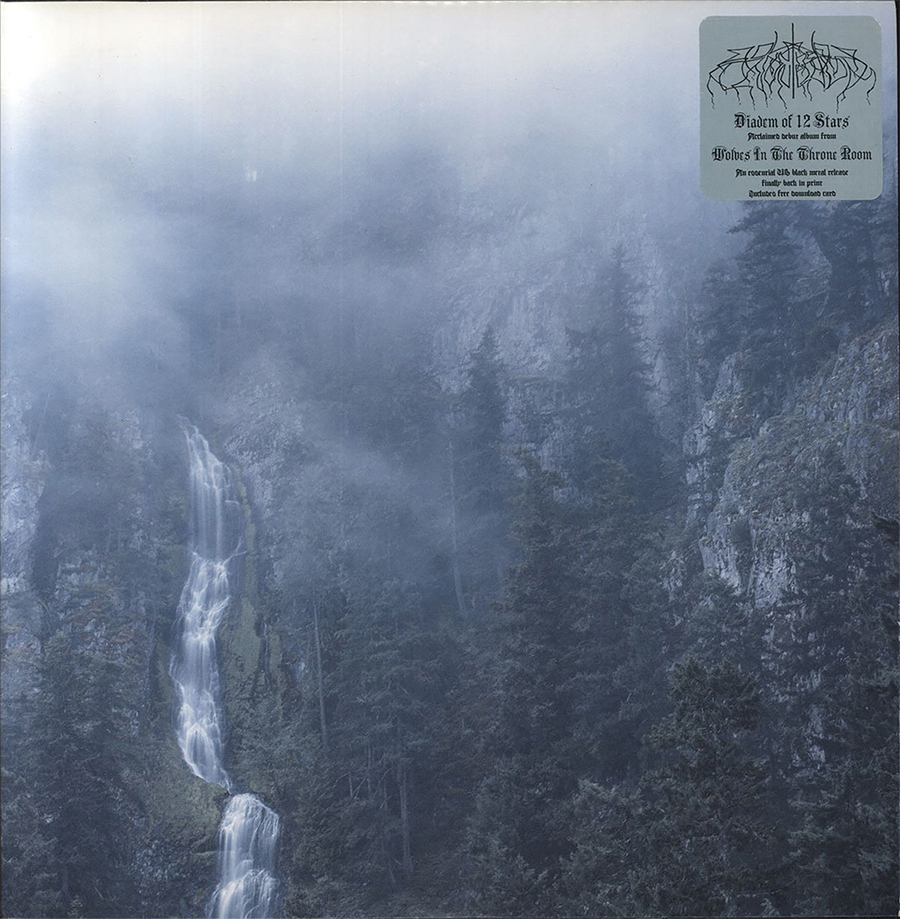
The relationship between Herzog’s visual landscapes and the sonic landscapes of Black Metal is further solidified by his frequent collaboration with the krautrock band Popol Vuh. The ethereal, synthesizer-driven scores composed by Florian Fricke for films like Aguirre and Nosferatu function as a direct precursor to the ambient, atmospheric interludes that are a staple of contemporary Black Metal. As Herzog himself recalls, “In Aguirre I wanted a choir that would sound out of this world, like when I would walk at night as a child, thinking that the stars were singing, so Florian used a very strange instrument called a ‘choir-organ’. It would sound just like a human choir but yet, at the same time, had a very artificial and eerie quality to it” (Cronin, 2003, p. 256). Fricke’s music, much like the droning guitars of extreme metal, does not dictate a specific emotional response; rather, it creates a vast, open sonic space that allows the viewer to project their own internal anxieties onto the visual landscape. This synthesis of sound and image creates a holistic experience of the Sublime, where the visual vastness of Nature is mirrored by the sonic vastness of the music. It is a technique that has been explicitly adopted by Black Metal bands, who frequently utilize ambient synthesizers and choral samples to enhance the atmospheric depth of their music, creating a “cinema for the ears” that is deeply indebted to Herzog’s visionary approach.
Furthermore, Herzog’s frequent use of fog, difficult, punishing terrain, and the actual physical exhaustion of his actors mirrors the arduous, lo-fi recording processes and the thematic obsession with winter and darkness found in the Black Metal ethos. As Thompson (2013) notes regarding the physical experience of cinema in Herzog’s work, the camera reaches into the scene, searching fearlessly for the truth within a given shot, making the aesthetic experience interrelated with physical endurance. The Romantic concept of Weltschmerz (world-weariness) is palpable in every frame. Herzog’s protagonists are driven by a mad, irrational passion. Much like the isolated figures in Caspar David Friedrich’s paintings, their hubris inevitably leads to their consumption by the very Nature they arrogantly seek to conquer (Ebert, 2017). Fitzcarraldo (1982) is perhaps the most extreme embodiment of this dynamic: the protagonist’s insane dream of building an opera house in the Amazonian jungle—and the filmmaker’s equally insane decision to drag a real steamship over a real mountain to depict it—collapses the boundary between art and life in a manner that is quintessentially Romantic. As Ebert (2017) noted, the film is “a document of a quest and a dream, and as a record of man’s audacity and foolish, visionary heroism, there has never been another movie like it” (p. 57). The jungle does not care about Fitzcarraldo’s dream; it is precisely this indifference that makes the film so deeply Romantic in its sensibility.
We must also briefly mention Herzog’s Nosferatu the Vampyre (1979). In his reimagining of the Dracula mythos, Herzog utilizes the landscape of the Carpathian Mountains to evoke a profound sense of doom. The prolonged shots of jagged peaks, ruined castles, and gathering storm clouds are pure nineteenth-century Romanticism brought to life. Subjectively speaking, this gives his films an extra poignant feeling, aligning perfectly with the Black Metal ethos of anti-humanism, the inevitability of death, and the supremacy of the natural world over the fragile constructs of human civilization. Corrigan (2013) points out that Herzog is fundamentally a romantic artist whose dense, flamboyant images serve as the only vehicle for profound significance in a contemporary setting.
Wim Wenders: Urban Ruins, Pure Seeing, and the Melancholy of Borders
While Werner Herzog finds the Sublime in the untamed, primordial wilderness, other visionary directors locate this exact same Romantic melancholia within the decaying structures of modernity itself. Wim Wenders, particularly in his seminal masterpiece Wings of Desire (1987), presents what we might call an “urban Romanticism.” The film follows invisible angels who wander through a divided, physically scarred, and emotionally fractured Berlin, acting as eternal, helpless observers of human tragedy and isolation.
As Graf (2002) observes, whereas Herzog dreams of outer-space or the depths of the jungle far removed from human life, Wenders seeks out his images in the cities, amongst the people, or on the desolate roads that link them. Wenders shoots Berlin in a high-contrast, heavily filtered black-and-white. This aesthetic choice immediately recalls the Xeroxed, DIY, high-contrast aesthetics of early Black Metal demo tapes and fanzines. The lack of color removes the distraction of the modern world, forcing the viewer to focus on texture, shadow, and emotional weight. In Wings of Desire, Wenders implicitly channels Walter Benjamin’s concept of the Angelus Novus—the angel of history looking back at the wreckage of the past in horror, while being violently propelled into the unknown future by the storm of progress (Delers & Sulzer-Reichel, 2020). Taking this philosophical concept, we can convey that the concrete ruins of a bombed-out Berlin, the graffiti-covered remnants of the Wall, and the desolate, muddy wastelands of the city center serve the exact same aesthetic and thematic purpose as the ruined medieval castles adorning the covers of bands like Satyricon or Dimmu Borgir. They function as memento mori; they are physical monuments to the inevitable decay of human endeavor, the fragility of empires, and the persistent passage of time, which is a core tenet of Romantic thought.
The debt to Caspar David Friedrich’s visual language is particularly explicit in Wenders’s road trilogy. As Delers and Sulzer-Reichel (2020) document in detail, Wenders frequently uses windows and windshields as a metaphor for the lens of the camera, partaking in a long tradition in art history that permeates the works of the German Romantics. In Wrong Move (1975), the protagonist Wilhelm ends up on an overlook at the Zugspitze in a shot that is “clearly an ironic reference to Caspar David Friedrich’s iconic painting, Der Wanderer über dem Nebelmeer / Wanderer above the Sea of Fog (1818), where a wastebasket can be clearly seen in the foreground and the railing prevents any danger of falling” (Delers & Sulzer-Reichel, 2020, p. 37). The sublime experience is clearly lost in postmodernity. Wenders presents a “postmodern sublime,” where the Wanderer is turned into a true nomad who stays in the same space by constantly moving. The characters in his road trilogy—Philip, Wilhelm, Bruno—”should not be seen as traveler but as the nomad, insofar as they stand still by constantly moving, distributed over West Germany, which is thus turned into an indefinite space” (Delers & Sulzer-Reichel, 2020, p. 39). This nomadic condition is the contemporary equivalent of Friedrich’s solitary wanderer: both figures are defined by their inability to belong, by their position at the threshold between the human and the natural, the present and the past, the self and the void.
Furthermore, as Kolker and Beicken (1993) argue, Wenders’s entire cinematic project is animated by what they call “the desiring gaze of filmmaking,” which “constructs a visionary union in which the intuition of the filmmaker entices the viewer into a desire for perception” (p. 18). This desire for pure, unmediated perception—for what Wenders himself calls “pure being as pure seeing”—is the cinematic equivalent of Friedrich’s instruction to close the bodily eye and see with the spiritual eye. Wenders’s cinema, like Friedrich’s painting, is fundamentally about the act of looking: about the possibility, and the impossibility, of truly seeing the world. Cook and Gemünden (1997) highlight that Wenders’s cinema aims for a state of “pure being as pure seeing,” functioning as a refuge from self-consciousness and a search for a post-ideological space. This ambition mirrors the meditative, atmospheric trance state induced by the repetitive tremolo picking in Black Metal. Both art forms demand a surrender to the visual or sonic environment. Kolker and Beicken (1993) further argue that Wenders is on a quasi-mystical search for vision and desire, presenting a romantic, eternal couple seeking a home for the heart in a fractured world. The angels in Wings of Desire, perched high on ruined churches looking down upon humanity, act as literal cinematic translations of Friedrich’s Rückenfigur—solitary wanderers possessing a profound Weltschmerz, yearning to feel the pain of mortal existence.
It is also worth noting the deep structural parallel between Wenders’s use of the windshield as a visual motif and the album cover as a framing device in Black Metal. As Delers and Sulzer-Reichel (2020) observe, the windshield in Wenders’s films “absorbs the feelings of the driver, reflects his wishes, and becomes in this way a mirror of his inner state of mind” (p. 71). The window always marks a dividing line between a character and his counterpart, whether it is a landscape or a human being. This is precisely the function of the album cover in Black Metal: it is a framing device, a window between the listener and the sonic landscape that awaits them. Both the windshield and the album cover mediate the encounter with the Sublime; they are thresholds, not barriers. In Wenders’s most celebrated sequence—the peepshow scene in Paris, Texas (1984)—the window between Travis and Jane becomes the site of a profound emotional revelation. The barrier that separates them is simultaneously the condition of their communication: it is only because they cannot touch each other that they can finally speak the truth. This dialectic of proximity and distance, of longing and impossibility, is the very essence of the Romantic Sehnsucht that animates both Wenders’s cinema and the most emotionally devastating passages of atmospheric Black Metal.

Theo Angelopoulos: The Plan-Séquence, The Culture of Links, and the Cinematic Drone
To complete our analysis of how the moving image appropriates the aesthetics of the Sublime, we must turn to the Greek auteur Theo Angelopoulos. Angelopoulos utilizes the cinematic medium to explore the Sublime through the lens of political, historical, and geographical isolation. In masterpieces such as Landscape in the Mist (1988), Ulysses’ Gaze (1995), and Eternity and a Day (1998), Angelopoulos subverts the bright, sun-drenched stereotypes of the Mediterranean landscape, opting instead for a world perpetually locked in grey winters, relentless rain, and impenetrable fog. As Karalis (2021) notes, Angelopoulos made films “to cinematically explore the formless or more appropriately the ‘unfilmed’—sometimes even the unfilmable—existential dynamics that he observed or intuited in the historical experience and the individual mind of his viewers” (p. 9). This commitment to the unfilmable is itself a Romantic gesture: it is the cinematic equivalent of Friedrich’s instruction to see with the spiritual eye, to bring what is seen in the dark into the light.
The cornerstone of Angelopoulos’s visual language is the plan-séquence (the extremely long take). His camera rarely cuts; instead, it slowly pans, tracks, and glides across bleak, fog-drenched borders, abandoned factories, and desolate, flooded landscapes. As Karalis (2021) argues, Angelopoulos consciously works towards the construction of the sublime as an aesthetic dimension within the moving images of cinema, articulating what Karalis terms an “ontological sublime”—an effort to give a concrete answer to multiple questions about living in a secularized world which does not have any place for the sacred or the numinous. These extended, meticulously choreographed shots create a hypnotic, almost trance-like state in the viewer. Angelopoulos’s cinematic language was, in Karalis’s formulation, “a systematic and persistent attempt to achieve the cinematic sublime: the sublime as immersion and emergence, the catalysts for ecstatic and oneiric experiences through filmic images” (Karalis, 2021, p. 9).
In our analysis of visual communication, we must note a critical structural similarity: the long take in Angelopoulos’s films functions analogously to the repetitive, droning, minimalist guitar riffs of Atmospheric Black Metal bands like Paysage d’Hiver, Drudkh, or even the ambient works of Burzum. Both mediums demand immense patience, submission, and immersion from their audience. They both utilize duration as a weapon against the fast-paced, easily consumable nature of modern pop culture. The slow, sweeping pan over a grey, rainy, and ruined landscape in an Angelopoulos film is not meant to advance a traditional, fast-paced narrative. Rather, it is designed to construct an overwhelming mood of longing—the German Romantic concept of Sehnsucht. As Horton (1997a) observes, Angelopoulos’s films force the audience “to return to zero and see the moving image with new eyes,” and critic Wolfram Schutte captures this perfectly: “His poetic medium is time. This allows the viewer to make his own images from what is projected on the screen—yes, it almost forces him to—while he remains critically aware of the technical means employed: the long shots, sequence shots, slow pans and long takes. They are scenes from a voyage through the world. Their complex structure sends the viewer on his own inner journey” (Horton, 1997a, p. 9).
The biographical dimension of Angelopoulos’s relationship with silence and fog is also deeply significant. As Karalis (2021) reveals, Angelopoulos confided that “the silence that permeates his films is an attempt to replicate the silence he ‘heard’ when the Germans entered an empty and silent Athens on Sunday 27 April 1941” (p. 62). This is not merely a biographical detail; it is the key to understanding the ontological weight of silence and emptiness in his films. The fog and the silence are not aesthetic choices in the conventional sense; they are the direct cinematic transcription of a traumatic historical experience. In this sense, Angelopoulos’s use of the Romantic landscape is more deeply personal and more politically charged than that of either Herzog or Wenders. The grey, fog-drenched borders of his films are not merely beautiful; they are haunted.
Horton (1997a) brilliantly characterizes Angelopoulos’s work as a “cinema of contemplation.” He suggests that Angelopoulos’s images function similarly to Orthodox icons; they do not preach, but rather invite contemplation, providing a “spiritual likeness” that embodies a tension between material reality and the transcendent. Horton also identifies Angelopoulos’s work as a “culture of links”—a cinema that transcends the fragmentation of modern life to evoke the universal and the mythical. This concept of a “culture of links” is particularly resonant in the context of our transmedial analysis: Angelopoulos’s films are themselves a form of cultural archaeology, excavating the buried connections between ancient Greek myth, Byzantine iconography, the Romantic tradition, and the contemporary experience of displacement and loss.
The role of music in Angelopoulos’s films further deepens this connection to the sonic world of extreme metal. Composer Eleni Karaindrou’s scores for his films operate through what Karalis (2021) terms a “disjunctive aesthetics”: the music functions as a counterpoint to the composition of the story, with “the strong emotionalism of the melodies counterbalancing the distancing effects in acting styles, chromatic patterns and storyline” (Karalis, 2021, p. 97). As Karaindrou herself stated: “We begin, in most cases, before there is a screenplay, working outwards from the film’s underlying concepts. Angelopoulos is a man who feels much and says little, so it’s important for me to understand the ideas at the root of his work, and how I can help convey the things which will not be verbally expressed in the film” (Karalis, 2021, p. 99). This description of the compositional process—music emerging from the film’s underlying concepts before the screenplay even exists—is remarkably close to the process described by many Black Metal musicians, for whom the sonic atmosphere precedes and determines the lyrical content. In both cases, the music is not illustrative but constitutive: it does not describe the landscape, it creates it.
When Angelopoulos films a massive, discarded monument of Lenin floating down a river on a barge in Ulysses’ Gaze (1995), he is engaging in a visual dialogue with the ruins of antiquity so beloved by the Romantics. As Karalis (2021) argues, the broken statue of Lenin is “both numinous and ominous, framing the sublime through its absence but also foregrounding it by the enormity of the emptiness around its vestiges” (p. 21). The statue of Lenin dissolving into the fog of the Danube is one of the most powerful images in the history of cinema precisely because it condenses into a single, extended shot the entire Romantic meditation on the ruins of human civilization, the passage of time, and the indifference of Nature. As Karalis and Bradatan (2022) explore, Angelopoulos’s films are grounded in existential poesis, exploring the social ontology of historicity, loss, and memory. In Landscape in the Mist, the natural phenomenon of mist stands for the illusory and mediated perception of reality, and the film ends with a mystical vision of a blue tree in the mist, a return to the source that provides the ontological consecration of the mundane. The atmospheric reliance on ambiance, the deeply nostalgic look at historical eras forever lost, and a constant, haunting fascination with existential and geographical borders place Angelopoulos’s cinematography in direct, irrefutable dialogue with the nineteenth-century Romantic painters and their modern musical inheritors in the underground extreme metal scene.
The Synthesis of Sound and Image: Emptiness as a Contemplative Haven
Having deeply traced the lineage of the Sublime—from the static, reproducible album covers depicting Kittelsen’s plague landscapes and Friedrich’s solitary wanderers, through the ecological estrangement of pagan extreme metal, and finally to the cinematic masterworks of Herzog, Wenders, and Angelopoulos—we arrive at a critical synthesis. What is the ultimate purpose of this shared transmedial language? Why do both a Scandinavian musician recording distorted guitars in a forest in 1993 and a lauded European auteur filming ruins in the 1980s reach for the exact same visual signifiers of fog, decay, and indifferent Nature?
The answer lies in the psychological and philosophical utility of the Sublime in the late modern age. As we established in our parameters, capitalist modernity, with its relentless drive for efficiency, urbanization, technological rationalism, and instant gratification, leaves virtually no room for the mythic, the spiritual, or the contemplation of human insignificance. Both Black Metal and the slow, demanding cinema of these auteurs operate as active cultural resistance. Furthermore, this aesthetic rebellion is not exclusively confined to the primordial wilderness; post-black metal projects such as Amesoeurs and Lantlôs actively recontextualize this pursuit of the Sublime within the concrete ruins and pervasive alienation of the modern metropolis. Through their respective mediums, they create deliberate zones of emptiness, discomfort, and sensory overwhelming.
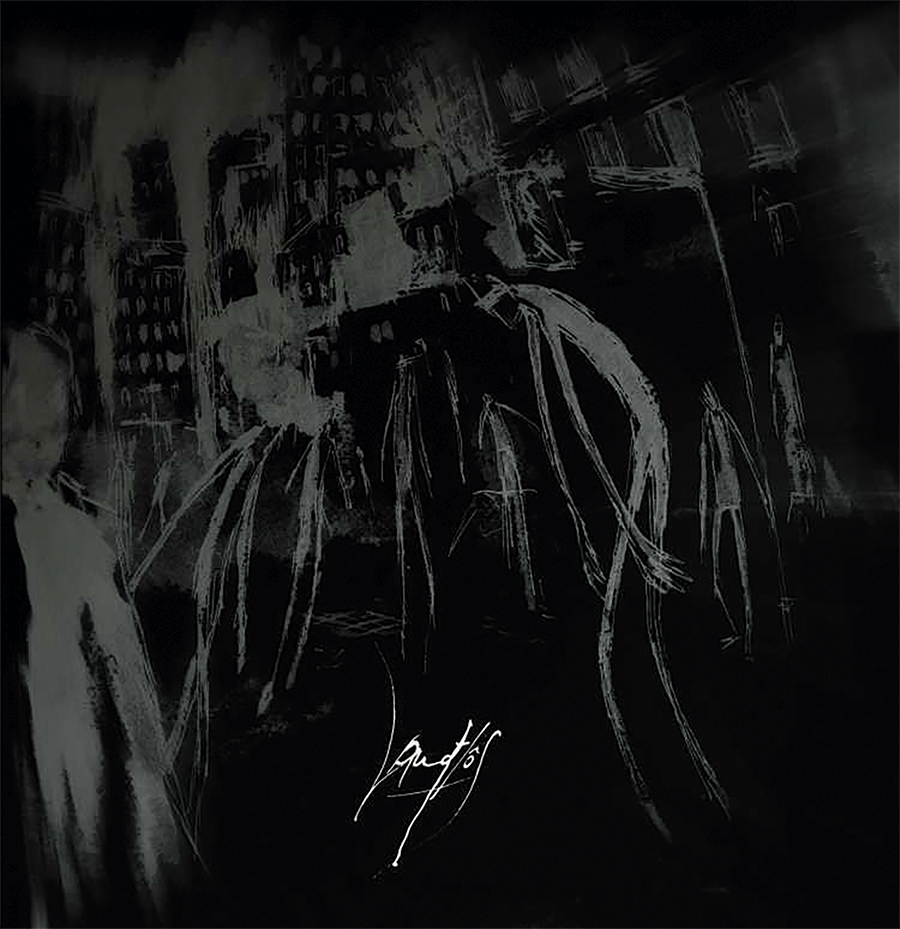
The impenetrable wall of sound in extreme metal and the agonizingly slow plan-séquence of a ruined landscape in auteur cinema force the audience into a state of active, often uncomfortable, contemplation. They are direct acts of resistance against the easy reproducibility and immediate gratification of the mainstream culture industry (a dynamic extensively critiqued by the Frankfurt School thinkers, such as Adorno and Horkheimer). By presenting the audience with the terrifying beauty of the Sublime—the vastness of the cosmos, the inescapable decay of civilization, the absolute finality of death—these artists violently strip away the illusions of modern safety and control.
Paradoxically, it is exactly within this overwhelming darkness and representations of terror that the audience finds a profound sense of release. The aestheticization of the abyss provides a necessary catharsis. The “pure seeing” of Wenders, the “ecstatic truth” of Herzog, the “contemplation” of Angelopoulos, and the visceral sonic assault of Black Metal all converge on a single point: the necessity of confronting the void.
Conclusion
To conclude, our research underscores the critical importance of a transdisciplinary approach to image construction, visual communication, and the enduring legacy of historical aesthetics. By systematically expanding our focus from the provenance of Black Metal album covers—firmly rooted in the appropriations of artists like Kittelsen, Doré, and Friedrich, and intertwined with themes of dark ecology and pagan revivalism—to the theoretical frameworks and visual practices of contemporary auteur cinema, we have definitively demonstrated that the aesthetic pursuit of the Sublime remains an indispensable, powerful tool across vastly different artistic mediums.
Whether it is Varg Vikernes utilizing Theodor Kittelsen’s The Pauper to visually anchor the droning, misanthropic despair of his music; Werner Herzog placing his fragile, madness-driven actors against the terrifying, awe-inspiring indifference of the Amazon basin in search of “ecstatic truth”; Wim Wenders using the monochromatic ruins of a divided Berlin to explore existential Weltschmerz and “pure seeing”; or Theo Angelopoulos utilizing the exhausting duration of the long take to capture the melancholic fog of the Greek borders to create a “culture of links,” the underlying philosophical intent is remarkably identical. Both the underground extreme musical subculture, which evolved from juvenile iconoclasm to complex philosophical composition, and high-art cinematic masterpieces utilize the exact same Romantic heritage to aggressively critique industrial modernity, capitalist alienation, and the hubris of the Enlightenment. In this way, we can firmly affirm that visual communication operates at a primal, collective level. The archetypes of the Sublime are deeply and permanently embedded in the human psyche. By synthesising the visual legacy of Romanticism, contemporary creators demonstrate that these aesthetics allow artists to violently pierce the veil of modern rationalism. In doing so, the immersive, overwhelming wall of sound in extreme metal reveals itself as the ultimate “cinema for the ears”—a sonic architecture that, much like the cinematic plan-séquence, demands absolute surrender and profound contemplation from its audience. Ultimately, they offer audiences—whether they are listeners of abrasive, extreme music or viewers of slow, demanding, contemplative cinema—a dark, majestic, and deeply necessary haven in which to navigate the inescapable void of human existence.
References
Angelopoulos, T. (Director). (1988). Landscape in the Mist [Film]. Greek Film Centre.
Angelopoulos, T. (Director). (1995). Ulysses’ Gaze [Film]. Greek Film Centre.
Angelopoulos, T. (Director). (1998). Eternity and a Day [Film]. Greek Film Centre.
Barski, K. (2021). Romantyczne korzenie black metalu: O intertekstach, estetyce transgresji i światopoglądzie twórców gatunku.
Benjamin, W. (1935). The Work of Art in the Age of Mechanical Reproduction. (J.A. Underwood, Trans.). Penguin Great Ideas.
Burke, E. (1757). A Philosophical Enquiry into the Origin of Our Ideas of the Sublime and Beautiful. R. and J. Dodsley.
Cook, R. F., & Gemünden, G. (Eds.). (1997). The Cinema of Wim Wenders: Image, Narrative, and the Postnational Soul. Contemporary film and television series.
Corrigan, T. (2013). The Films of Werner Herzog: Between Mirage and History. Routledge Library Editions: Cinema.
Cronin, P., & Herzog, W. (2003). Herzog on Herzog: Conversations with Paul Cronin. Farrar, Straus and Giroux.
Delers, O., & Sulzer-Reichel, M. (2020). Wim Wenders: Making Films That Matter. Bloomsbury Publishing Plc.
Ebert, R. (2017). Herzog by Ebert. University of Chicago Press.
Graf, A. (2002). The Cinema Of Wim Wenders: The Celluloid Highway. Wallflower.
Herzog, W. (Director). (1972). Aguirre, the Wrath of God [Film]. Werner Herzog Filmproduktion.
Herzog, W. (Director). (1979). Nosferatu the Vampyre [Film]. Werner Herzog Filmproduktion.
Herzog, W. (Director). (1982). Fitzcarraldo [Film]. Werner Herzog Filmproduktion.
Horton, A. (1997a). The Films of Theo Angelopoulos: A Cinema of Contemplation. Princeton University Press.
Horton, A. (1997b). The Last Modernist: Films of Theo Angelopoulos. Cinema voices.
Karalis, V. (2021). The Cinematic Language of Theo Angelopoulos. Berghahn Books.
Karalis, V., & Bradatan, C. (2022). Theo Angelopoulos: Filmmaker and Philosopher. Bloomsbury.
Kolker, R. P., & Beicken, P. U. (1993). The Films of Wim Wenders: Cinema as Vision and Desire. Cambridge film classics.
Lopes, J. G. S. de A. (2021). Vociferando Paisagens, Bradando Nostalgias: A Cena Musical Black Metal Norueguesa como Espaço de (Re)Significações sobre o Mundo Natural. Universidade Federal do Rio Grande do Norte.
Löwy, M., & Sayre, R. (2001). Romanticism Against the Tide of Modernity (C. Porter, Trans.). Duke University Press.
Manea, I.-M. (2020). Aesthetic Heathenism: Pagan Revival in Extreme Metal Music.
Mitchell, W. J. T. (2002). Landscape and Power (2nd ed.). University of Chicago Press.
Pires, F. A. de M. (2022). The presence of Romantic themes in Black Metal album covers: a study of provenance and prevalence [Doctoral dissertation, Universidade do Porto].
Pires, F. A. de M. (2021). Appropriating death: the works of Theodor Kittelsen in black metal album covers.
Silva, J. F. P. M. (2016). Black Metal: history, trace of character and archetype.
Thompson, K. M., & Herzog, W. (2013). The Cinema of Werner Herzog: Aesthetic Ecstasy and Truth. Columbia.
Vaughan, W. (2004). Friedrich. Phaidon Press Ltd.