Abstract
This article examines Negentropy: The Last Man in the Wasteland by Hugo Paquete as a case study, an electronic opera that redefines the genre by integrating generative composition, meta-music, and environmental interactivity into an adaptive, multisensory system. The work utilizes CO2 sensor data as a creative input, transforming environmental fluctuations into dynamic soundscapes through real-time sonification and advanced signal processing. By incorporating AI-driven generative music, improvisation, and open compositional systems, the opera delves into themes of techno-existentialism and human agency within a post-apocalyptic narrative. Positioning electronic opera within the broader context of digital and multimedia performance, this research highlights the intersection of technology, interactivity, and artistic expression. Employing Research through Art (RtTA) and Research through Design (RtD) methodologies, the project explores human-AI collaboration in libretto creation and sound generation, pushing the boundaries of meta-music and real-time computational systems. Future developments aim to expand environmental data inputs—such as temperature, humidity, and light metrics—to enhance system responsiveness and introduce interactive performer interfaces, including gesture-controlled systems and wearable devices. The opera’s adaptive framework fosters immersive audience engagement through multimodal experiences that combine sound, visual elements, and spatial interaction. AI-driven signal processing enables the system to evolve dynamically, contributing to advancements in sound design, music composition, and post-techno aesthetics in opera. Situated at the intersection of art, science, and technology, this study underscores the transformative potential of electronic opera as a hybrid artistic and research-driven practice, expanding its theoretical and practical dimensions.
Keywords: Generative Composition, Meta-Music, Eletronic Opera, Data Sonification, Artificial Inteligence.
Introduction
The concept of opera has undergone a profound transformation with the integration of digital, multimedia, and electronic elements, highlighting the dynamic interplay between technology and art. Electronic opera embodies this evolution by incorporating electronic technology into its composition and performance, employing techniques such as electronic music, real-time sound processing, and interactive interfaces. This innovation has also given rise to related approaches, such as multimedia opera, which integrates diverse communicative forms, including visual projections and soundscapes, to extend the operatic experience beyond traditional theatrical boundaries. By merging visual, auditory, and narrative languages, multimedia opera creates intricate and immersive experiences. The boundaries between electronic and multimedia opera are often blurred, with hybrid forms emerging that draw on elements from both traditions. Interactivity serves as a defining feature of these hybrid works, encompassing the interplay between performers and technology while fostering a deeper sense of audience immersion. The continued evolution of opera into these contemporary forms reflects an ongoing quest for novel modes of expression that blend tradition with technological innovation. Research into interactive instruments tailored for opera singers and stage applications seeks to enhance performers control, scenic impact, and expressiveness, granting them greater agency in their craft and within the performance context. Artistic and design research, particularly through methodologies like Research through Art (RttA) and Research through Design (RtD), has played a importante role in driving these advancements. These approaches use instruments and performances as experimental exemplars to explore and redefine operatic environments. The development of synergetic systems involving performance, improvisation, and interactivity, where performers collaboratively generate sound at a meta-level rather than following traditional ensemble models, represents the progressive aspirations of electronic and multimedia opera.
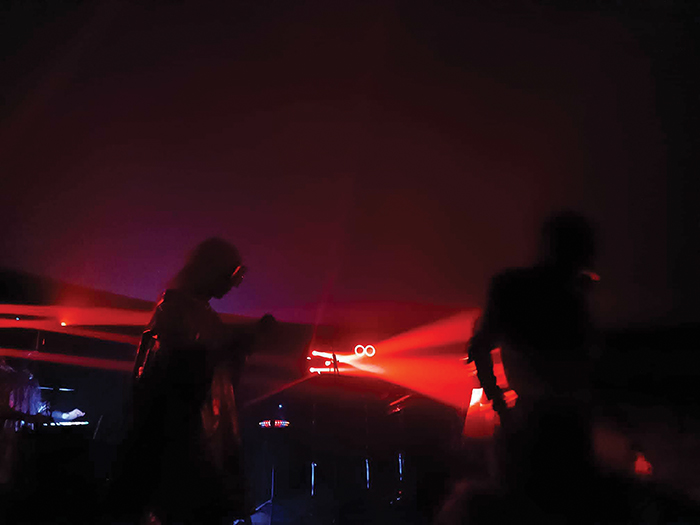
The definitions of digital, multimedia, and electronic opera remain fluid and interconnected, reflecting the ongoing evolution of the art form. In light of these considerations, this analysis will focus on the electronic opera Negentropy: The Last Man in the Wasteland1 by Hugo Paquete, which premiered on June 21, 2024, at the Dome of the Porto Planetarium – Centro Ciência Viva do Porto. For the purposes of this discussion, the work will be examined under the conceptual framework of electronic opera, which, in my view, encapsulates and integrates the various derivatives of contemporary opera practices. The convergence of emerging technologies and artistic innovation provides fertile ground for challenging conventional norms and expanding opera’s expressive potential. These new forms promote a opening to explore the intricate relationships between humanity and technology. As Tod Machover suggests about the opera, “because it’s a hybrid form, has actually been a more fertile ground for technology than most other forms of classical music”. (Machover, 2006). Although technology has long been utilized in opera, recent advancements have introduced unprecedented expressive possibilities, driven by the democratization of tools within both the DIY community and the broader industry. The accessibility of sensors, microcontrollers, hardware, computer music software frameworks, and artificial intelligence as “non Human” (Paquete, 2019) has fostered new avenues for creation and experimentation. This shift has contributed to what Carl Unander-Scharin describes as the “emergence of a new instrument,” (Unander-Scharin, 2014) while also shaping innovative aesthetic concepts, such as those explored in Negentropy: The Last Man in the Wasteland, framed as a post-techno electronic opera.
Research through Art
The project adheres to the RttA methodology, which emphasizes the artistic creation process as a method of inquiry, positioning the artwork itself as a tool for generating and communicating knowledge. In Negentropy, this manifests through the exploration of the audience’s physicality engagement with the performance space. The CO2 sensor system, designed to translate real-time environmental data into dynamic soundscapes, embodies the principles of RttA by making the process of artistic creation inseparable from the research outcomes. By treating the performance as a living organism that reacts to audience-generated data, the project raises critical questions about agency, co-creation, and interactivity. These questions are not only explored conceptually but also materialized through the audience’s active participation, turning the performance into both an artistic event and a research experiment. The artistic framework of Negentropy investigates “metacreativity” (Navas, 2022), where the interaction between human and artificial systems generates new forms of expression. This reflexive process where art simultaneously serves as a research subject and a method, exemplifies how RttA bridges theoretical inquiry and artistic practice.
Research through Design
The RtD methodology, focuses on the iterative process of designing artifacts to address specific challenges and generate insights. In the context of Negentropy, the CO2-based interactive system and other technological elements serve as design exemplars, developed through cycles of prototyping, testing, and refinement. The CO2 sensor system exemplifies RtD through its iterative development. From the selection of sensors and microcontroller hardware (e.g., Teensy) to the design of custom software for mapping sensor data to MIDI signals, every component was tested and adapted to meet the unique demands of the performance. The resulting system is not merely a tool but a co-creative element that influences and is influenced by the performers and audience. The iterative design process also engages with the opera’s conceptual themes, such as temporal fluidity and a-temporal construction. By enabling real-time modulation of soundscapes based on environmental inputs, the CO2 system materializes these abstract concepts into tangible, experiential elements of the performance. This aligns with RtD’s emphasis on the artifact as a means of exploring and communicating design principles.
Technology development, interaction and implementation
The integration of technology in electronic opera often serves distinct dramatic purposes, including associating specific sounds with characters, narrative moments, scenography, interaction, and the methodologies underlying sophisticated human-machine interactions within the sonic spectrum or dramaturgical framework. This process, referred to “Sensory Digital Intonation” (Unander-Scharin, 2014), exemplifies the potential of interactive systems to enhance artistic expression. Optimizing sensor placement to effectively capture and transmit progressions in music and performance is a complex and time-intensive endeavor.
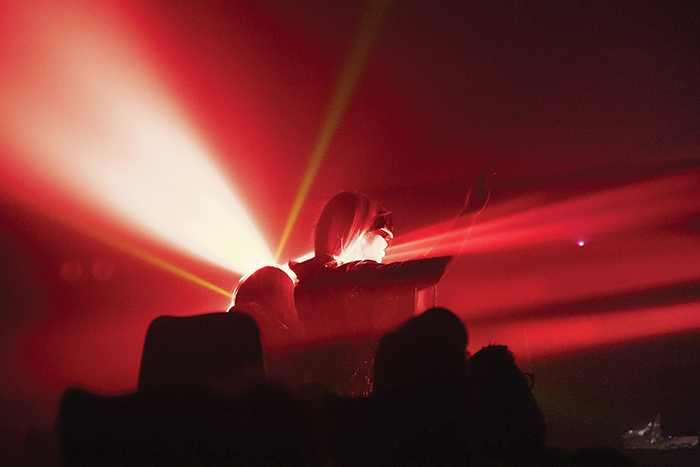
This meticulous task is crucial for aligning technological configurations with artistic intentions, ensuring seamless integration between performers and interactive systems. Interactive instruments, designed for specific performances, empower singers and performers to manipulate technology directly, fostering a profound synergy between human and machine. These systems present both challenges and opportunities for self-expression, enabling the development of open frameworks for production, improvisation, and performance, this dynamic interaction generates unique moments where the artwork emerges from an unstable balance of established rules and unforeseen relationships. Such interactivity was extensively explored in the Negentropy electronic opera, with various systems tested independently, laying the groundwork for broader considerations about their usage. One system employed in the project was the Hot Hand ring interactive system, developed by the Source Audio Company. This system tracked the performer’s hand movements in three-dimensional space (xyz coordinates) and converted them into sound manipulations and MIDI-controlled parameters. These parameters influenced vocal elements such as reverb, pitch, filtering, and triggered sonic components like samples, notes, and synthesizer controls. The Hot Hand hyperinstrument enabled real-time vocal modifications through gesture activation, requiring a learning process and fostering the potential for integrating improvisation and freedom into the opera’s score. Additionally, various voice processing techniques were employed to explore timbral possibilities, enabling performers to develop a nuanced understanding of the relationship between their body movements and the resulting sonic articulations produced by baritone Rui Baeta and Hugo Paquete.
Metamusic, improvisation and the perssuit of spontanius meaning
In therms of the music aesthetic, methology and significance the concept of “metamusic” (Christou, 1960) and Iannis Xanakis in the mid 1960 at the text “Musiques formelles, Music Stochastique” (Exarchos and Hoffman, 2023) was ussed as a operacional element in composition following the base Jani Christou conceptual linhage of the concept, as a homenage and in pratical sensse integrating reintrepertations of his emblematic works like Anaparastasis I: The Baritone (1968) and Anaparastasis III: The Pianist (1968) pushed further envolving improvisation, eletronic music and technolgy. Metamusic, its an approach that transcends music as a mere sound object. Intersection between music, phylosophy and the human conditiont his approach goes beyond traditional musical creation, seeking to explore the relationship between sound expression and existential and cognitive aspects. The vocal expressivity in Jani Christou’s works, such as Anaparastasis I: O Barítono, is explored through unconventional methods that extend beyond traditional singing techniques, incorporating elements such as speech, whispers, and screams, the conceptual frame of his compositional approtch open a fundamental infleunece in my musical ideas and aesthetics persutes. And for other side, this musical approtch, open space for experimentation envolving technology in the expansion of the sonic, teatrical and performative elements for the author and performer, Pushing the exploration broaden the expressive possibilities of the human voice, enabling it to convey visceral emotional intensity that ecoing with the subject of the opera as a dystopian space of human redencion and resiliance in a terminal human moment. Metamusic compositions and methods are further distinguished by their non-conventionalism and deliberate departure from traditional musical structures. By breaking with established norms, this endeavors intresting me as an author, to create new sonic experiences combining opera inspired in the Avant-Garde trasgretions to push new ones ussing Industrial Music, Breakcore, Digital Hardcore, Extratone and Experimental Eletronic Music following a Noise aesthetic with a Punk ethos, to capture the multifaceted complexity of the human condition in contemporanity, embodies a profound pursuit of catharsis and mysticism arranged arround technology as intencificator, using musical expression as a medium to explore emotions and subjects of identity, solitude, and the search for existential meaning in this digital fragmented world. Framing what I propose as Post-Techno aesthetics, pushing a human centric approtch of agency base in raw and visceral emotionas and sonic dissonance approtched with “micro and maximum sound” (Paquete, 2022).
Techo-existencialism, dytopia and the human viscerality
Negentropy serve as a framework for exploring existential and spiritual questions about the digital and post-apocalyptic world, offering audiences an opportunity for emotional and intellectual transcendence in a situation of suspended decay. Central to my artistic philosophy is the integration of improvisation, generative and spontaneity in musical performance in a system of stable and unstable rules, factor that was challanging for al the artist envolved. I prioritize a dynamic and organic interaction between the performer and the composition, allowing the music to evolve in real time and adapt to the specific context of each performance. This approach not only fosters a unique immediacy in the musical experience but also emphasizes the Punk ethos and the living and mutable nature of the art form. The approach to stage direction required exposing singers and performers to more open methods of staging and positioning, allowing for variability in specific moments of the score. By incorporating flexibility, the production push moments of facilitate genuine expressions or spontaneous divergences among the participants, integrating ideas of negentropy order and entropic chaos. The exploration of madness and hysteria in deeply connected to the principles and aesthetics of improvisation in this work. While improvisation may appear spontaneous, it is fundamentally grounded in skill, training, and an understanding of artistic tradition. In the context of this production, the improvisational elements were meticulously designed to balance the chaotic and visceral expressions of hysteria with structured artistic foresight. This approach ensured that the performers could effectively navigate the interplay of freedom and constraint, embodying the themes of collapse and existential struggle central to the narrative. Improvisation in Negentropy operated on multiple levels, influencing both the overall structure and specific moments within the performance. For instance, the performers’ movements and vocal expressions often varied in response to the unpredictable dynamics of the stage and the audience. These variations drew upon a mastery of theatrical and sonic traditions, allowing the performers to reinterpret and reorganize the narrative in real time. By referencing external meanings, such as cultural symbols of madness or contemporary crises, the production added layers of complexity and relevance, grounding the abstract themes in recognizable contexts. The association of improvisation with risk, surprise, and discovery was particularly resonant in this work and worked with the invited artist. The performers ability to inhabit the moment and think on the spot reinforced the raw emotional intensity of the hysteria and delirium portrayed. This immediacy fostered a profound sense of connection between the performers and the audience, as both experienced the unfolding drama as an unpredictable and shared event. The embrace of spontaneity and unpredictability, contrasted sharply with the rigid structures of traditional operatic performances. This contrast highlighted the collapse of order within the narrative, mirroring the disintegration of the central character’s reality. Ultimately, the incorporation of improvisation in Negentropy served as both a dramatic and aesthetic device, enriching the portrayal of madness, hysteria and disorientation. Offering the audience an immersive and transformative experience that blurred the boundaries between performer, audience, and narrative.
Robots, bodies and the menagment of performative improvisation methodologys of fluidity and interrupion.
The opera begins in complete darkness, utilizing small remote-controlled mobile robots to initiate the scene. These robots establish a relationship between scale and the architectural space of the planetarium, exploring alternative representations of bodies and agency within the dramaturgy. As the robots traverse the space, they generate a low-frequency drone sound, and upon reaching their designated endpoints, they leap, marking the transition into the main performance. These robots function as vehicles symbolizing entities on a journey, creating a deliberate contrast between the vast grandeur of the space and the absence of human bodies on stage. This interplay between robotic movement, spatial scale, and absence emphasizes the perception of a futuristic narrative, underscoring the significance of the artifacts in the broader context of the opera. To navigate the improvisational methodologies employed in the performance, a guiding principle was introduced for the actors, dancers, and singers. In moments of uncertainty or disconnection, performers were instructed to pause and enter a suspended temporal loop of movement. This framework allowed performers to rejoin the group organically, embodying the concept of temporality frozen in action. These moments of suspension created sculptural forms that evoked states of descent, stasis, or bodily surrender, contributing to the opera’s exploration of the human condition within an entropic and technological landscape. Improvisation within the opera challenges traditional artistic conventions that view the creation of art as a planned process executed by a composer or artist, with performers serving a solely interpretative role. By incorporating improvisation, the opera blurs the boundary between interpretation and creation, raising questions about the nature of the performer’s contribution as interpeters and in other moments authors. In performing arts, structures are often considered “types, while individual performances are seen as “tokens” (Bresnahan, 2015).
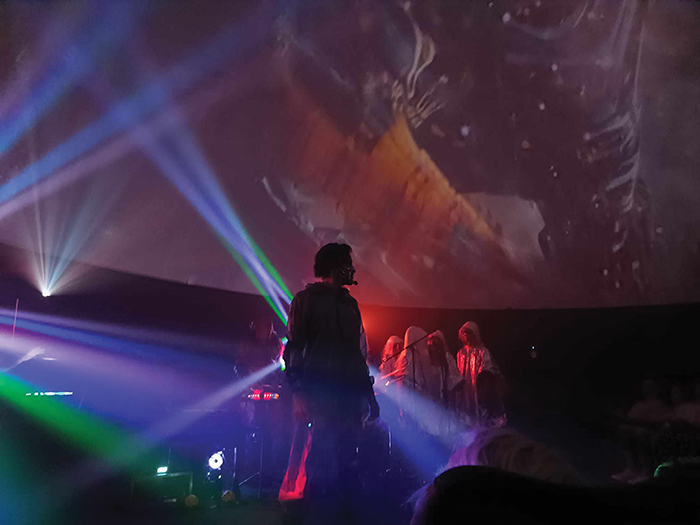
This approach aligns with philosophical debates on the ephemeral nature of improvisation, which often defies the traditional application of the concept of a work of art as a stable set of notated universal rules ore artefacts undestendes as types, or repeatable structure. Improvisations are sometimes viewed not as stabel works but as unique, unrepeatable performance events that deal with other conceptualization of the work of art. The distinction between type as universal concept of a notated art work and token specific instance becomes ambiguous, as certain improvisational acts may lack a defining type. The type-token distinction, while foundational in understanding enduring and repeatable works of art, struggles to accommodate the nuances of improvisation in live performance. Improvisation challenges this framework due to its ephemeral nature and lack of strict repeatability. In the Negentropy project, these challenges are met through a reconceptualization of how performance and creation are understood, integrating improvisation into a hybrid fluid model that transcends the limitations of the traditional type-token distinction. The collaboration of young performers at the early stages of their careers, yet exhibiting professional quality, such as Bruno Sousa, Amanda Duda, Alex Alvão, Delrik Borba, Flora Gouveia, Rita Rocha, Rodrigo Guimarães, R. Gritto, and Letícia Arlandis, provided an opportunity to integrate them into a production context with a differentiated methodology. This experience served as a valuable space for learning and personal growth. This hybrid fluid model impacts aesthetic evaluation, particularly in live performances where audiences only experience the piece once. In such cases, the authenticity of the artist and their ability to remain in the moment become central to the evaluation of the performance. The immediacy of improvisation fosters a profound connection between artist and audience, emphasizing authenticity and spontaneity as intrinsic to the creative process. In the context, improvisation challenges conventional notions of art and performance while enhancing the intricate interaction among performers, technology, and space. These components are reframed as figures operating within an a-temporal dimension, exploring speculative futures that defy linear temporal progression. This conceptual framework integrates notions of temporal fluidity and alternative temporalities, shaping the unfolding actions and musical development. The resulting aesthetic constructing a multidimensional temporal experience.
The interplay of time, sound, and the fluidity of performance interruption
Central to this exploration is sound, which operates across its fundamental dimensions of pitch (frequency), intensity (sound pressure), and time (duration). Among these, the perception of duration plays a pivotal role in shaping the audience’s engagement with musical time. This relationship between sound and time creates a bridge between objective time quantified through measurable, chronometric means and subjective time, shaped by individual perception and consciousness. The latter, influenced by intensity, texture, and the developmental trajectory of sound objects integarted in the sound spacialization system, produces a fluid temporal experience that resists fixed measurement. In this opera, this divergence immerses the audience in a malleable temporal reality where sound and action become dynamic, ever-evolving constructs rather than linear or static events. While chronometric time provides a measurable framework, the psychological experience of duration forms uniquely within each observer’s consciousness. Musical time, as experienced in this work, emerges from the energetic evolution of sound events, disrupting notions of fixed temporal progression. This interplay creates a temporal space that fluctuates between exact measurement and perceptual fluidity and shock. The combination of improvisation, generative processes, and structured composition forms an a-temporal framework within the opera, placing characters, soundscapes, and actions outside linear temporal boundaries, thereby fostering a sense of disorientation.
The interplay of speculative improvisation, technology, instability, and collapse
This speculative exploration of the future blurs the lines between past, present, and possibility, crafting an auditory and visual narrative space that transforms our understanding of time. The performers’ interactions with technological systems and spatial arrangements further embody this fluidity of time, as their actions are shaped by both established frameworks and spontaneous improvisation, expressed across both analog and digital realms. These elements converge to form a layered and evolving experience where each moment unfolds through a delicate interplay of determinism and unpredictability. A unifying element in this approach is the concept of the “premiere-factor” (Unander-Scharin, 2014), which encourages artists involved in the production to remain in a heightened state of alertness. This state is crucial for the progression of the work’s methods, as the inclusion of improvisation introduces elements of unpredictability that demand attention and commitment from the participants. Performance endurance becomes essential to accommodate these unstable and contingent factors, which are integral to the exploratory nature of the project. This approach challenges actors, singers, and musicians to move beyond their comfort zones, fostering moments of both personal and collective aesthetic transcendence. The goal is to achieve singularities in the interplay between human elements and computational artificialities, where the combination of these factors generates unique and profound artistic outcomes.
The project emphasizes the interplay and variability of interpretations across different presentations, highlighting the concept of performance endurance and the necessity for performers to be present and attentive, reacting in real time to the unstable environment. Invited musicians, such as violinist Ianina Khmelik and Pedro Castro, bring their expertise in contemporary classical and experimental music, establishing a foundation of trust and quality in their improvisations. Organist Cláudio de Pina contributes with his minimalist aesthetics and drone music qualities, enhancing the piece with the environmental tonal qualities of the organ and synthesizers. The proposed concept of performance endurance is not only a key requirement for navigating the unpredictability inherent in such productions but also an essential framework for the development of interactive technologies in opera. Particularly in projects that explore generative processes, endurance underscores the importance of maintaining reliability and adaptability across all facets of production. It establishes a system of interdependent relationships and commitments among the collaborators, reinforcing the cohesion and resilience necessary to realize innovative artistic visions.
Metacriativety: Large linguage models and the perssuit for a generetive and instable fluid system betwin human and machine agency
This project exemplifies the transformative role of AI in contemporary art, particularly in the construction of its libretto. Employing a mash-up methodology, the production leveraged AI to remix texts from diverse sources, creating a non-linear, dynamic narrative that both disrupted and redefined traditional conventions. The opera’s approach draws from post-structuralist methodologies of fragmentation and deconstruction, enabling meaning to flow fluidly and interactively, the narrative unfolds. AI served as more than a tool in this process; it acted as a co-creator, contributing to reframe human and machine agency. By remixing scientific literature, poetry, and fiction, the libretto expanded its scope, addressing humanity’s complex narrative as a cultural construct. Other central concept is “meta-creativity” (Navas, 2024), wherein the interaction between human and machine generates agency for new forms of artistic expression. AI’s role in the creation process aligns with paradigms of remix and meta-creation, functioning as a repository of human cultural activity that fosters innovative narrative structures inspired by the large linguagem models. The dynamic interplay of generative processes, stochastic elements, and fixed structures in Negentropy resonates with the opera’s exploration of abstract time fluidity and shock, a-temporal construction and remix llinguage models. By combining AI improvisation with structured text, the work establishes a multi-layered cosmology of voices in which characters and actions transcend linear progression, reflecting the complexities of human history as a multi-voiced construct. This a-temporal framework invites both the audience and active artists to delve into speculative futures and alternative temporalities, enriching the dramaturgy with unpredictability and creative adaptability as forms of endurance resistance. It also addresses the mental disparities in a collapsed world, where language can serve as either a salvation or a limitation. While post-digital aesthetics often celebrate “Glitch” (Betancourt, 2016) as a driver of innovation, Negentropy aims to reintegrate error into the ecology of events as a present factor. It establishes a system of regularity and permutation that remains open to destruction and reformulation, driven autonomously by technological reactions or human actions in real time. The work develops strategies to manage, highlight, and liberate unpredictable events, recognizing their significance not only within technology but also in human agency as vital components for fostering imagination and creativity. This approach positions imperfection and indeterminism within the natural dynamics of systems, striving to create spontaneous negentropic moments within a broader context of algorithmic creativity. The aim is to develop a model of performance and criation that intertwines human and artificial agency, challenging traditional hierarchies of creation while promoting a reflective, co-creative process that blurs the lines between the analog and digital realms, all framed within a shared sense of reality and analyzed through the same perceptual mechanisms. In this context, by investigating meta-creativity, AI remix methodologies, and a-temporal post-techno dramaturgy and composition, the opera broadens the boundaries of narrative and aesthetic expression. This integration of human and machine not only redefines the operatic form but also underscores the evolving relationship between technology, creation, and humanity.
Interface Culture: Interaction, Feedback and Human Agency
The integration of CO2 sensors into the performance environment introduces a nuanced and discreet interactive dimension that problematizes traditional staging boundaries between audience, environment, and performance. Designed in collaboration BY Hugo Paquete with Christopher Zlaket and David Stingley, this hardware system transforms the performance space into a responsive “organism” that reacts to the audience’s presence, breathing patterns, and level of occupation.
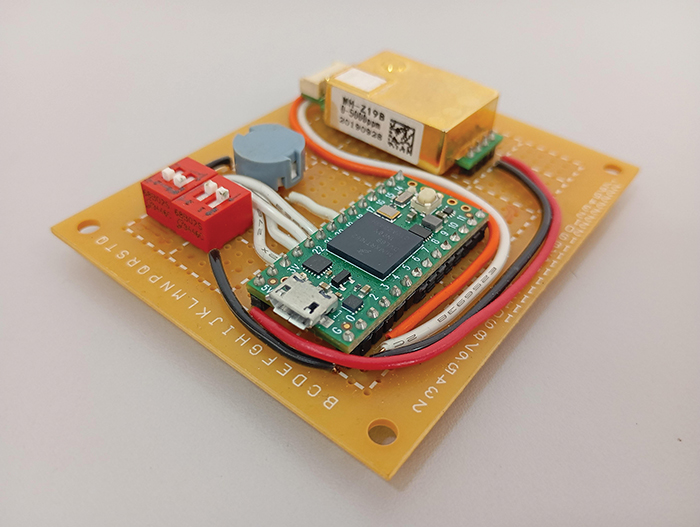
The real-time data generated by the audience’s physical presence as “unsoundbody” (Migone; 2012) and engagement shapes the sonic elements of the opera, particularly those embedded in specific segments of the score. This interactive layer redefines the role of the audience, moving beyond passive spectatorship to establish a participatory dynamic where audience presence directly influences the sonic generated material and the performance experience. By incorporating CO2 sensors, the performance engages with notions of environmental feedback and co-creation, positioning the audience as active contributors to the sonic and atmospheric texture of the opera. This reimagining of audience agency aligns with contemporary interactive art, where technological interfaces mediate the relationship between humans and the environment, fostering a personalized and context-sensitive experience. The use of such responsive systems invites a critical interrogation of “interface culture promoting difrenciated levels of human-machine interaction (…) Weibel 1989, Sakane 1989, Laurel 1990, Cornwell 1992, Sakane 1995, Dinkla 1997, Hünnekens 1997” (Sommerer, and Mignonneau, 2004) and its implications for contemporary art, “designing interactive systems that bridge social, entertaining and artistic elements, their prototypes and installations have often reached into the wider field of media products and entertainment applications” (Sommerer and Mignonneau, 2008). Interfaces, as mediating tools, blur distinctions between natural and artificial, performer and spectator, and planned versus emergent outcomes. In this opera, the CO2 sensors act as both a technological and conceptual interface, challenging linear dramaturgies by introducing stochastic and generative elements that rely on human-environment interaction. This interplay reflects a broader shift in interactive art towards participatory ecosystems, where the boundaries of authorship, creativity, and aesthetic control are increasingly diffused.
Responsive Culture: CO2 sensors, Agency and Environment
The incorporation of responsive technologies such as CO2 sensors raises critical questions about the implications of interface culture in contemporary art:
- Agency and Control: Who, or what, is the creator in such performances? The distributed agency among performers, audience, and technological systems complicates traditional hierarchies of authorship, suggesting a new paradigm of co-creation where the boundaries between human and machine are porous.
- Ephemerality and Temporality: The use of real-time data introduces an ephemeral quality to the performance, as the resulting sonic and atmospheric elements are contingent on the specific audience interaction in a given moment. This resonates with discussions on improvisation and the type-token distinction, where the performance exists as a singular, non-repeatable event shaped by its context.
- Aesthetic experimentation: By relying on unpredictable audience behaviors and environmental feedback, the opera integrates an aesthetic of imperfection and indeterminacy, challenging the notion of polished, repeatable works. This aligns with post-digital aesthetics, where error, failure, and randomness are embraced as creative opportunities.
The interactive use of CO2 sensors in Negentropy can also be linked to the broader idea of the performance environment itself becomes a co-creator. The audience’s physiological stimulation in the context generate, inputs translated into data that influence the musical computacional sonic results and spatial transformations situates the performance within an a-temporal framework, where characters, soundscapes, and actions unfold dynamically in response to real-time conditions. This integration of human and technological elements creates a living system of interdependence, where no single actor or system holds absolute control over the outcome.
Computer music applicability of the conceptual frame
The sonification of carbon dioxide (CO2) data in Negentropy: The Last Man in the Wasteland was achieved through custom-developed hardware and software systems, designed to process and map environmental data into intricate, immersive soundscapes. Utilizing the capabilities of Ableton Live 11 and custom MIDI configurations, the integration employed two CO2 sensors, each contributing to distinct MIDI signal paths. These paths were routed through a meticulously constructed series of audio processing stages, enabling the transformation of real-time environmental feedback into a dynamic auditory experience. I will discuss the signal processing techniques involved in the project, focusing on the conversion of data into sound while highlighting the processes and aesthetic approaches to generative sound composition.
The performance’s structure is organized into five Areas (AR), interspersed with Transitions (TR) and an Introduction (ITR), following a defined progression. The sections are as follows:
ITR-01: Introduction loop featuring CO2 sonification.
- AR-01: The Dust of the Stars.
- AR-01.1: Continuation of The Dust of the Stars.
- AR-01.2: Development and TR-01: Transition from The Dust of the Stars.
- AR-02: Anaparastasis I: The Baritone, followed by TR-02: Voice-based transition.
- AR-03: Improvisation involving the invited musician, CO2 data, and vocal experimentation.
- AR-03.1: Last Man Solo.
- AR-03.2: Development, TR-03.2: Transition from Last Man Solo.
- TR-03.3: Intense vocal experimentation in Last Man Solo.
- TR-03.4: Collaborative improvisation with the invited musician, CO2 data, and voice.
- AR-04: Anaparastasis III: The Pianist, transitioning through TR-04: CO2-focused interlude.
- AR-05: The Dust Shadows, concluding with ITR-02: CO2 loop.
The full performance spans approximately 1 hour and 15 minutes. This structured sequence allows the integration of CO2 sonification with vocal and instrumental improvisations.
Signal Path and Processing Overview on the ITR-01
The sonification process in ITR-01 uses environmental CO2 data collected from sensors. This data is converted into MIDI signals and processed through a single MIDI channel, forming the foundation for a complex synthesis and sampling framework. The following describes the signal flow, transformation, and processing stages with scientific precision.
- CO2 Data Conversion and MIDI Transformation
The raw CO2 sensor data is interpreted and converted into MIDI note values, which are subjected to a sequence of transformations:
- Randomization:
- Chance: A 70% probability of randomizing note output.
- Choices: 19 selectable MIDI note outputs.
- Scale: A randomized scale of 3 notes in BI (bipolar) mode.
- MIDI Effect (Ubiquitous):
- Style: Random mode with a straight groove.
- Rate: 1/16th notes with a gate of 50%.
- Repeats: Single iteration.
- Retrigger: Beat-synchronized at 1.
- Transpose System:
- Key: C.
- Transposition: 2 steps upward.
- Interval: +14 semitones.
- Velocity: Targeted at 64 over a duration of 1 second.
- Synthesis and Sound Generation
The transformed MIDI signals are routed to a synthesizer (Plant Synth) and processed using custom parameters:
- Synth Preset: Negentropy.
- Branch 1 and 2 Parameters: Define tonal complexity.
- Rotational Modulation: Alters the sound dynamically in real-time.
- High-Pass Filter:
- Attack: 4.37 ms.
- Release: 200 ms.
- Frequency Cutoff: 631 Hz.
- Resonance: 62%.
- Morphing: Configured at 96% between band-pass (BP) and high-pass (HP) filtering.
- LFO Modulation:
- Amount: 12.9%.
- Rate: 2.83 Hz.
- Phase: 171%.
- Noise shaping modulates specific frequencies dynamically.
- Effects Chain
The synthesized sound is further processed with a reverb and spatial effects:
- Reverb:
- High Cutoff: 1.68 kHz.
- Diffusion Network: Set to high.
- Chorus:
- Density: 60%.
- Scale: 30%.
- Negative Dry/Wet Ratio: -33%.
- Reflections: 1.1 dB.
- Macro-Controlled Parameters:
- Room Size: 1.75.
- Decay Time: 1.4 seconds.
- Room Reflections: 1.1 dB.
- Room Diffusion: 0.0 dB.
- Pre-Delay: 2.36 ms.
- Reverb Shape: 0.51.
- Dry/Wet Ratio: 33%.
- Sampler Integration
The MIDI data is also routed to a sampler configured with two distinct samples:
- Sample 1:
- Trigger: MIDI note C, one-shot mode.
- Playback Settings:
- Warp Mode: Pro.
- Frequency: 22.0 kHz.
- Resonance: 63%.
- Envelope Controls:
- Attack: 0.10 ms.
- Decay: 600 ms.
- Release: 50 ms.
- Sample 2:
- Trigger: MIDI note C, classic mode.
- Playback Settings:
- Warp Mode: Pro.
- Frequency: 22.0 kHz.
- Resonance: 0%.
- Snap Mode: Enabled.
- Envelope Controls:
- Attack: 0.10 ms.
- Decay: 600 ms.
- Sustain: 0 dB.
- Release: 374 ms.
Each sample is carefully adjusted for start points, loop parameters, and tonal blending, ensuring seamless integration with the synthesized sounds.
Generative Composition and Meta-Music: Redefining Musical Agency through CO2 Sonification
Generative composition, as exemplified in the methodologies and technologies employed in Negentropy, represents a pursuit of innovative approaches to sound generation and musical processes. It reflects a paradigm shift in the roles of composer, performer, and listener within contemporary electronic music.
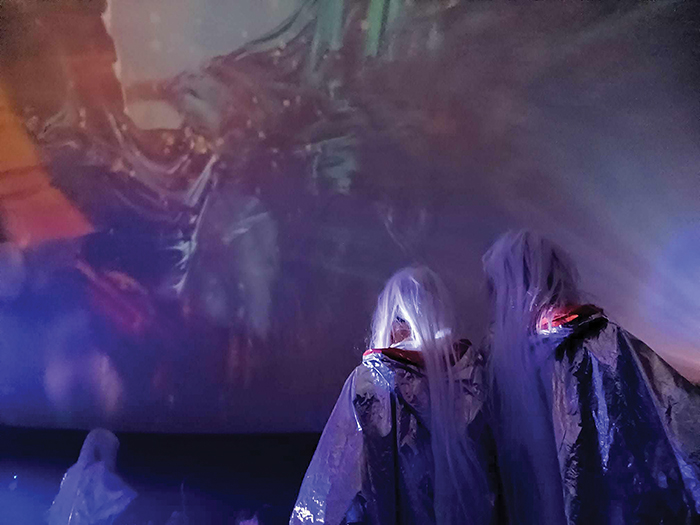
By leveraging environmental data, such as CO2 levels, to drive intricate audio transformations, generative systems challenge traditional notions of composition, structure, and agency. This exploration highlights how the project aligns with broader discourses on generative composition, meta-music, and interactive sound studies. At its core, generative composition involves creating systems that autonomously generate musical material.
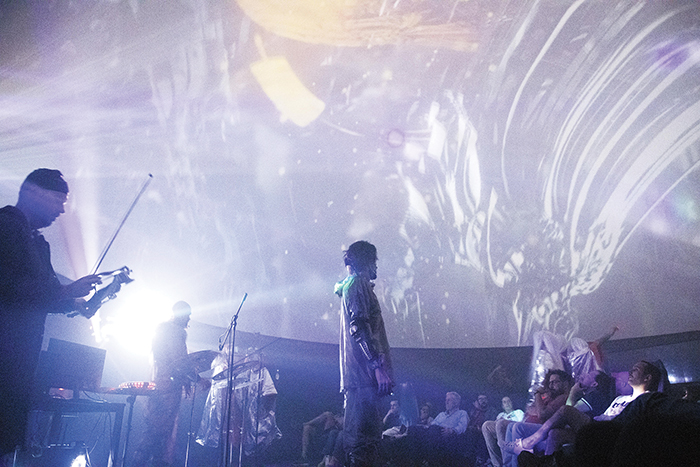
These systems often rely on algorithmic processes, real-time data inputs, and stochastic methods to produce dynamic, non-linear outputs. In the context of Negentropy, CO2 sensors capture environmental fluctuations, translating them into MIDI data that forms the foundation for further transformations. This framework introduces variability and instability, fostering a fluid, open-ended form that evolves in real time. The signal path and sound design processes developed for Negentropy exemplify this principle, integrating data conversion, MIDI transformation, synthesis, and effects processing into the compositional framework, which is central to the artistic research underpinning the project. For instance, the sonification process in the ITR-01 employs randomized note outputs, probabilistic gating, and dynamic modulation, ensuring that the musical material remains responsive to real-time environmental inputs. Such practices blur the line between composition and improvisation, situating the composer as a curator of rules and environments that balance control with unpredictability.
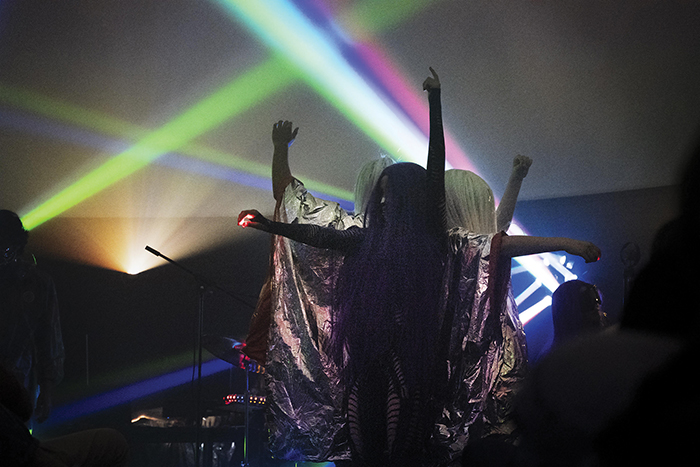
This dynamic aligns with the concept of meta-music, which transcends fixed compositional frameworks by emphasizing music as an evolving process shaped by interactions between performers, technology, and environmental data. In this context, music exists on a meta-level, encompassing both the generated output and the system that produces it. The focus shifts from composing specific moments to designing systems capable of generating infinite variations. Stochastic methods are central to both generative composition and meta-music, introducing elements of chance and unpredictability into the creative process. This approach is evident in Negentropy, where randomization algorithms determine note selection, modulation rates, and sample triggers. These stochastic elements, such as the 88% probability of randomized note outputs in the MIDI chaos generator within the ITR-01, imbue the system with a sense of organic fluidity. Similarly, granular synthesis parameters dynamically modulate based on sensor input, ensuring variability while inviting performers and listeners to engage with the music as an unfolding, emergent experience rather than a static artifact. The integration of CO2 data into Negentropy situates the project within the broader discourse of eco-composition and data-driven art. Transforming environmental metrics into musical textures offers a poignant commentary on the interconnectedness of human and ecological systems. This practice aligns with contemporary explorations of sustainability and the Anthropocene, positioning music as a means of reflecting on humanity’s impact on the environment while expanding the possibilities for data manipulation and musical innovation. A defining feature of Negentropy is its integration of performers into the generative system. Unlike traditional compositions, where performers interpret a fixed score, this system empowers performers to interact dynamically with the soundscape, balancing fixed and open scores. This interaction reflects a departure from hierarchical relationships between composer, performer, and audience. Instead, all participants, including environmental inputs, become active agents within a distributed network of agency. The resulting performative space dissolves boundaries between human and machine, composition and improvisation, and art and data.

By integrating generative composition, meta-music, and data sonification, Negentropy exemplifies the transformative potential of contemporary electronic music to transcend traditional paradigms. Reimagining the roles of data, performers, and technology fosters an understanding of music as a living, adaptive system. Through the innovative use of CO2 data, stochastic processes, and interactive sound design, Negentropy challenges conventional notions of musicality while inviting a reevaluation of the relationships between art, science, and the environment. This synthesis of generative and meta-musical practices paves the way for future explorations in interactive, data-driven art.
Post-Techno Aesthetics
Represent a countercultural and meta-political artistic movement shaped by artificial intelligence and post-digital micro-sound. It embraces instability, noise, dysfunctionality, and raw sound as tools of resistance, reclaiming creative agency from commodified, AI-driven music systems.
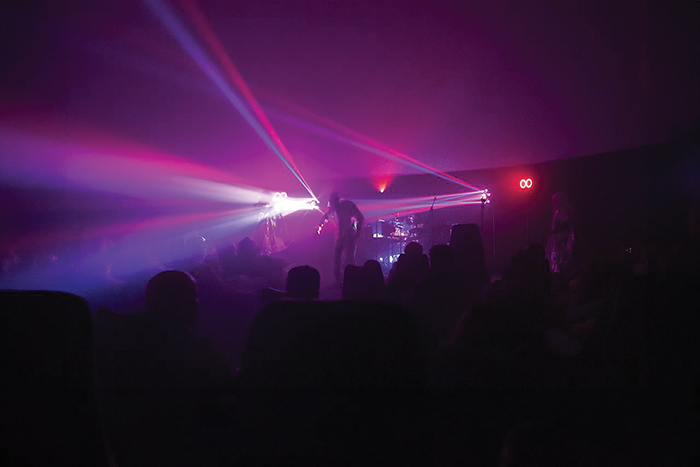
Drawing influence from subcultures like Noise Music, Industrial, Techno, and Punk, it uses chaos and emotion to critique societal norms and explore speculative futures. Through experimental methods, ike tech-hacking and feedback loops, it creates a dialogue between human and machine, rejecting algorithmic control and promoting expressive freedom. Ultimately, post-techno is a radical, underground framework for reimagining the role of art, technology, and politics.
Future developments
In analyzing the outcomes of this research, I have identified several areas for further development in generative composition, meta-music, and interactive technologies within contemporary opera. My aim is to build upon the established methodologies while expanding the artistic, technological, and theoretical frameworks that underpin this exploration. First, I see significant potential in expanding the integration of environmental data into the artistic process. While CO2 data has proven effective, incorporating additional environmental metrics such as temperature, humidity, or light intensity could greatly enhance the system’s responsiveness and expand its sonic palette. I am particularly interested in designing dynamic interactivity models that allow system parameters to adapt in real time to audience engagement or external environmental changes, thereby creating layered and multi-dimensional performances. Another critical area involves enhancing the interaction between performers and technology. I aim to develop more intuitive and flexible performer interfaces, such as gesture-based controls or wearable devices, to foster greater synergy between human and machine. Building frameworks that balance performer freedom within generative systems, while maintaining conceptual coherence in the narrative and sonic structures, is an ongoing challenge that I am eager to address. In the realm of data sonification, I want to explore multimodal approaches that integrate visualizations of environmental data alongside sonic representations. This would create richer, multi-sensory experiences for audiences. Additionally, I plan to implement adaptive signal processing techniques driven by AI, allowing the system to evolve over time based on past performances and environmental inputs, thereby increasing the dynamism and complexity of the generated outputs. Developing the theoretical foundation of meta-music remains a priority. I seek to expand its implications for authorship, agency, and temporality, and plan to conduct empirical studies to assess how audiences perceive and engage with meta-musical systems. These studies will help refine the theoretical framework and better contextualize how open-ended generative systems impact both performers and listeners. AI presents a unique opportunity to revolutionize narrative construction and music approtches to composition. I aim to further explore AI-driven libretti and music creation, focusing on maintaining coherence within dynamic and non-linear text generation. Balancing human and machine co-authorship in these processes raises important ethical and aesthetic considerations that I plan to examine in depth. Sound design is another area for growth, particularly in spatial audio and real-time processing techniques. I intend to experiment with advanced spatialization methods, such as ambisonics and binaural audio, to deepen audience immersion. Refining real-time granular synthesis and stochastic modulation methods will further enhance the responsiveness and complexity of the generative framework. Beyond the performance itself, I see opportunities to apply these methodologies across disciplines, including interactive installations and hybrid theater. I aim to develop educational tools and frameworks to make generative and interactive music systems more accessible, fostering broader engagement with these innovative approaches. Finally, I aim to further integrate ecological and societal dimensions into this research by expanding on the concept of “post-internet electronic music” (Pedersen, 2017), not merely as a stylistic or technological shift, but as a critical lens through which to examine the entangled relationships between sound, environment, and networked society. This approach acknowledges that musical production and reception today are inseparable from the infrastructures and ideologies of the digital age. Within this framework, post-internet electronic music can be seen as part of the digital aesthetics of contemporaneity, reflecting and responding to the intensifying entanglement of humans, machines, and ecosystems. It operates not only through sound but through interfaces, code, distribution platforms, and the affective labor of online presence. This aesthetic is increasingly aware of its material footprint and the cultural politics of its production, raising questions about digital extractivism, global inequalities in tech labor, and the sustainability of artistic practices in a networked world. Situated within the post-techno paradigm, this expanded conceptual framework moves beyond the club-oriented and industrial roots of techno to engage with a more fluid and heterogeneous field of sonic practices. In this context, agency is no longer confined to human creators, but is distributed across a network of human and non-human actors—including algorithms, environmental data streams, and automated systems, which collectively shape artistic expression. Rather than rejecting the digital, post-internet electronic music critically interrogates it. Through the deployment of irony, reflexivity, and hybrid aesthetic strategies, such practices deliberately blur conventional boundaries between nature and technology, embodiment and simulation, activism and artistic experimentation. This reflective posture enables new forms of engagement with the conditions of digital culture. Expanding upon these performative strategies, the use of generative music systems as a medium for commenting on sustainability and the Anthropocene aligns this research with urgent contemporary cultural and ecological concerns. Moreover, the design of participatory performance environments in which audiences are empowered to interact with and influence generative processes in real time, has the potential to cultivate a heightened collective awareness of the interdependencies between technological systems and environmental realities. By advancing these experimental trajectories, this research aims to make meaningful contributions to the fields of computer music, generative art, and contemporary opera, while simultaneously enriching broader interdisciplinary dialogues at the intersection of art, science, and technology.
Production Conditions
The project was funded by the Direção Geral das Artes (DGARTES) and the Portuguese Republic, through the Culture sector. Additionally, it benefits from the institutional support of several entities, including: the Porto Planetarium – Centro Ciência Viva, Lisboa Incomum, the Escola Superior Artística do Porto (ESAP), the University of Algarve, the Research Center for Arts and Communication (CIAC), Artech International, ACE: Teatro do Bolhão, LTK4: Center Court Festival and the Mechanical Music Museum.
Conclusion
The project represents a advancement in the integration of environmental interactivity and artistic expression, offering a compelling case study in the use of real-time ecological data as a driver for generative sound art. By translating fluctuations in CO2 levels into dynamic audio textures through custom hardware, algorithmic processes, and advanced signal processing, the project constructs a performative framework in which environmental data becomes both material and agent of sonic composition. This electronic opera reconfigures the relationship between technology, artist, audience, and environment, fostering a distributed model of authorship in which all participants, including non-human elements, actively shape the evolving musical output. The project’s use of generative composition, metamusic, and improvisational structures enables a non-linear, context-sensitive soundscape that evolves continuously across performances. Techniques such as temporal inversion, granular synthesis, and stochastic modulation are not merely technical procedures but integral components of the work’s aesthetic and conceptual identity. Crucially, the project employs methodologies from Research through Art (RtA) and Research through Design (RtD), situating the performance not only as a creative endeavor but as a site of inquiry into the boundaries of opera, temporality, and sonic cognition. The aesthetic embrace of imperfection and post-digital sensibilities further challenges the conventions of polished, repeatable works, privileging emergence, error, and contingency. Ultimately, “Negentropy” exemplifies how artistic practice can meaningfully engage with ecological and technological systems, transforming ambient data into expressive, participatory, and temporally fluid experiences. In doing so, it contributes to a growing discourse at the convergence of art, science, and technology, and marks an important step in the evolution of electronic opera as both an art form and a mode of knowledge production.
Notes
Bibliography
Betancourt, Michael. Glitch Art in Theory and Practice: Critical Failures and Post-Digital Aesthetics. United Kingdom: Taylor & Francis, 2016.
Bresnahan, Aili W. “Improvisation in the Arts.” Philosophy Faculty Publications 7, 2015. https://ecommons.udayton.edu/phl_fac_pub/7.
Exarchos, Dimitris, and Peter Hoffmann. “Metamusic.” In A Xenakis Dictionary, edited by Dimitris Exarchos. Association Les Amis de Xenakis, 2023. https://www.iannis-xenakis.org/en/metamusic.
Leavy, Patricia. Method Meets Art: Arts-Based Research Practice. New York: Guilford Publications, 2020.
Machover, Tod, et al. “Opera Electronica.” Newsline: Opera America 15, no. 10 (July/August 2006): 19–22. https://opera.media.mit.edu/publications/machover_2006_opera_electronica.pdf.
Migone, Christof. Sonic Somatic: Performances of the Unsound Body. Berlin: Errant Bodies Press, 2012.
Navas, Eduardo. The Rise of Metacreativity: AI Aesthetics After Remix. New York: Routledge, 2022.
Paquete, Hugo. “The Sound of Non-Human Agents from a Musicological Perspective.” In Ensaiar Arte e Ciência para religar natureza e cultura. Teatro do Frio, 2019.
Paquete, H. (2022), Imanências espectrais: reflexão sobre o pós-digital nas artes sonoras, PhD thesis, Universidade Aberta, Lisboa.
Pedersen, A. B. “Human Excess: Aesthetics of Post-Internet Electronic Music.” International Conference on Mathematics and Computing, 2017.
Sommerer, Christa, and Laurent Mignonneau, eds. Interface Cultures – Artistic Aspects of Interface Design. Linz: University of Art and Industrial Design, 2004.
Sommerer, Christa, Laurent Mignonneau, and Dorothée King. Interface Cultures. Bielefeld: transcript Verlag, 2015.
Unander-Scharin, Carl. Extending Opera – Artist-led Explorations in Operatic Practice through Interactivity and Electronics. Stockholm: KTH/CSC/MID, 2014. TRITA-CSC-A-2014:19. ISBN 978-91-7595-401-1.